With heavy hearts, we report the tragic news about this multi-talented actor… Check the comments 👇👇👇
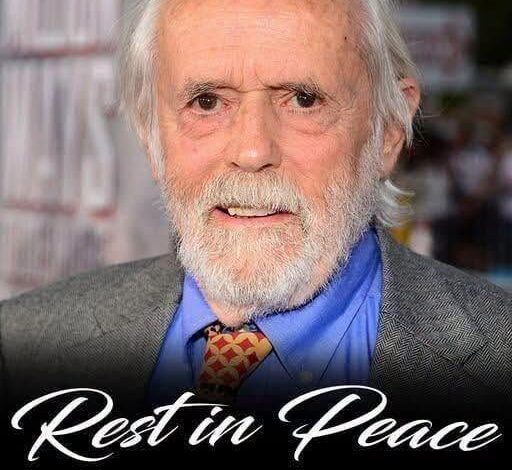
# Matt Clark, Beloved Back to the Future Part III and Western Film Actor, Died at 89 — Remembering His Remarkable Career
He may not have been the biggest name on a movie poster, but millions of film lovers knew his face.
Whether he was standing behind a bar in the Old West, appearing alongside Clint Eastwood, or bringing a rugged character to life in a classic American Western, Matt Clark had an extraordinary ability to make even a brief appearance memorable.
For more than five decades, he helped bring authenticity to some of Hollywood’s most recognizable productions.
His film credits included *The Outlaw Josey Wales*, *Pat Garrett and Billy the Kid*, *Jeremiah Johnson*, and *Back to the Future Part III*.
Television audiences also knew him from programs including *Grace Under Fire*, *Bonanza*, and *Little House on the Prairie*.
Clark was never the kind of performer whose reputation depended on celebrity headlines or glamorous red-carpet appearances.
Instead, he developed a career built on craftsmanship, consistency, and an unmistakably natural screen presence.
On March 15, 2026, the respected American character actor died at his home in Austin, Texas.
He was 89.
His death was confirmed by family members, who remembered him not only for his work but also for the values, friendships, and personal relationships that defined his life away from Hollywood.
For audiences who loved classic Westerns, his passing marked the loss of a familiar face from an extraordinary era of American filmmaking.
## Matt Clark’s Death Was Confirmed by His Family
Clark died on Sunday, March 15, 2026, following complications associated with back surgery.
His wife, Sharon Mays, confirmed those circumstances to *Variety*.
His daughter, producer Amiee Clark, also spoke with *The Hollywood Reporter*, explaining that her father had suffered a serious back injury several months before his death.
The news was reported publicly on March 16.
Clark’s family described him as someone who valued his work without becoming consumed by fame.
He respected the acting profession, appreciated opportunities to work with talented people, and placed considerable importance on family and lasting friendships.
Those recollections reflected a man whose personal identity extended beyond the characters he portrayed.
While audiences remembered the familiar screen presence, his family remembered the husband, father, and grandfather behind it.
The loss was personal for those closest to him, but his death also prompted tributes from people who had worked with him during his long career.
## From Washington, D.C., to the Acting World
Matt Clark was born November 25, 1936, in Washington, D.C.
He grew up in Arlington, Virginia, in a family where education and practical skills were important parts of everyday life.
His father worked as a carpenter and boat builder, while his mother was involved in education.
Before committing himself to acting, Clark served in the United States Army.
He later attended George Washington University, initially studying business.
But his interests eventually led him in another direction.
Rather than continue along a conventional academic or business career, he became involved in theater.
That decision changed the course of his life.
Clark moved to New York, where he studied acting and gained experience in stage productions.
His training included work at the HB Studio, where he studied with respected acting teachers Herbert Berghof and William Hickey.
He also participated in Off-Broadway productions and worked with the experimental Living Theatre.
Those early years gave him an understanding of performance that would later distinguish his film work.
His approach was grounded in character rather than celebrity.
He learned to pay attention to behavior, dialogue, and the small details that make fictional people feel believable.
## A Career That Began With Serious Drama
Clark’s early film appearances included *Black Like Me* in 1964.
He also appeared in the 1967 drama *In the Heat of the Night*, starring Sidney Poitier and Rod Steiger.
The latter film became one of the most significant American dramas of its period and won the Academy Award for Best Picture.
These early projects placed Clark in productions that demanded serious performances and convincing supporting characters.
For a character actor, that kind of work could be especially important.
A supporting role might involve only a limited amount of screen time, but every scene still needed to contribute to the larger story.
Clark developed a reputation for understanding that responsibility.
He could portray difficult, intimidating, ordinary, or sympathetic people without making them feel artificial.
That versatility helped him establish relationships with directors and filmmakers working in different genres.
Before long, however, one type of movie became particularly important to his career.
The American Western.
## Why Western Films Became His Specialty
During the 1960s and 1970s, Western films remained an important part of American cinema.
Their stories frequently explored frontier life, justice, violence, survival, and the conflicts that shaped the mythology of the American West.
They also required actors who could make the setting feel convincing.
A Western needed more than a recognizable leading man.
It needed believable townspeople, lawmen, outlaws, ranchers, travelers, and men whose lives appeared shaped by difficult circumstances.
Clark was particularly effective in those roles.
His rugged appearance and understated performance style suited the genre.
He seemed comfortable portraying characters who had lived hard lives.
He appeared in productions including *Will Penny*, *The Cowboys*, *Jeremiah Johnson*, and *The Life and Times of Judge Roy Bean*.
These films connected him with some of Hollywood’s most celebrated performers.
He worked alongside John Wayne, Paul Newman, and Robert Redford, gradually becoming a familiar presence in the Western genre.
Although his roles varied, his performances shared an important quality.
They helped make fictional environments feel inhabited by real people.
## Working Alongside Clint Eastwood
One of the most recognizable chapters of Clark’s career involved his work with Clint Eastwood.
The two appeared in multiple productions, including *The Beguiled*, *The Outlaw Josey Wales*, and *Honkytonk Man*.
*The Outlaw Josey Wales*, released in 1976, became one of Eastwood’s most celebrated Westerns.
The film followed a Missouri farmer who becomes an outlaw following the violence of the American Civil War.
Its story explored revenge, loyalty, survival, and the possibility of building new relationships after tremendous loss.
Clark played Kelly, adding another supporting performance to his growing collection of Western roles.
In productions like these, Clark demonstrated that an actor did not need to dominate every scene to make an impact.
The strongest supporting performances often depend on restraint.
Rather than drawing attention away from the main character, they strengthen the world around that character.
That ability made Clark a valuable presence in films led by major stars.
## Pat Garrett and Billy the Kid
Another significant credit came in 1973 with Sam Peckinpah’s *Pat Garrett and Billy the Kid*.
The film starred James Coburn and Kris Kristofferson, with a supporting cast that included several distinctive character actors.
It became known for its somber vision of the American West and its exploration of friendship, violence, and change.
Bob Dylan also contributed to the production, appearing onscreen and providing music.
For Clark, the film represented another opportunity to work within a genre he understood particularly well.
His involvement placed him among an ensemble of performers whose individual contributions helped establish the atmosphere of the story.
Today, the film remains an important reference point in discussions of revisionist Westerns.
Clark’s participation forms part of a larger body of work that connected him to some of the most influential productions of that era.
## The Back to the Future Role Fans Still Remember
For a different generation of moviegoers, Clark’s most recognizable performance came in 1990.
That year, he appeared in *Back to the Future Part III*, the final installment of the original trilogy starring Michael J. Fox and Christopher Lloyd.
The film transported Marty McFly and Doc Brown to the Old West.
Set largely in 1885, it combined science fiction, comedy, adventure, and familiar Western imagery.
Clark played Chester, the bartender at the Palace Saloon in Hill Valley.
It was a smaller role than those of the film’s leading actors, but one that fit naturally into his long association with Western settings.
His presence helped make the fictional frontier town feel authentic.
For viewers familiar with his earlier films, his appearance offered an enjoyable connection to the traditional Western genre.
For younger audiences, it introduced his face through one of the most popular science-fiction franchises in movie history.
That is part of what made his career so unusual.
A performer who had worked in serious Western dramas during the 1970s could later appear in a time-travel comedy inspired by many of the same cinematic traditions.
And both kinds of performances could remain memorable.
## A Familiar Face on American Television
Clark’s work extended well beyond feature films.
Over the decades, he appeared in numerous television productions.
His credits included *Bonanza*, *The Waltons*, *Kung Fu*, *Little House on the Prairie*, *Dynasty*, *Magnum, P.I.*, *Walker, Texas Ranger*, and *Chicago Hope*.
These appearances introduced him to audiences who might not have recognized his name but immediately recognized his face.
Later, he became familiar to sitcom viewers through recurring work on *Grace Under Fire*.
He also appeared in *The Jeff Foxworthy Show* during its first season.
Moving between Western dramas, television comedies, and contemporary stories required versatility.
Clark demonstrated that he could adapt to different styles while retaining the natural approach that characterized his performances.
His television career also reflected the working life of a professional actor who valued consistent opportunities.
Not every role was intended to create a star.
Sometimes the goal was simply to make a scene work.
And Clark spent decades doing exactly that.
## He Also Worked Behind the Camera
Although best remembered for acting, Clark explored filmmaking from another perspective.
In 1988, he directed the feature film *Da*.
The production starred Bernard Hughes, Martin Sheen, and William Hickey, who had been one of Clark’s acting teachers.
Based on Hugh Leonard’s play, the story centered on a man reflecting on his relationship with his father.
The film differed considerably from the Westerns that had established Clark’s reputation.
It demonstrated his interest in storytelling beyond performing individual characters.
His directing work also included television projects.
While acting remained the main focus of his career, these experiences revealed another dimension of his professional interests.
Clark was not simply someone who appeared in films.
He was someone who had spent much of his life studying how performances and stories are constructed.
## The Final Chapter of His Screen Career
As Clark grew older, he continued appearing in selected productions.
His later film credits included *42*, the 2013 sports drama about baseball legend Jackie Robinson.
He also appeared in the 2014 Western comedy *A Million Ways to Die in the West*.
That film became his final screen credit.
There was something fitting about the choice.
After decades of helping define the atmosphere of classic Westerns, Clark ended his screen career with another film set in the American frontier.
Although the movie approached the genre through comedy, it drew on the same recognizable traditions that had shaped so much of his professional life.
Clark’s career had stretched from the social dramas of the 1960s to Hollywood productions released more than fifty years later.
Few performers maintain such a long and varied presence in film and television.
His longevity reflected his adaptability and the value filmmakers continued to find in his work.
## The Life He Built Away From Hollywood
Clark’s family described a man whose personal life was grounded in values that mattered more to him than public recognition.
He maintained friendships lasting decades and took pride in practical work.
Family recollections described how he built his own home, reflecting a willingness to work with his hands and approach challenging projects patiently.
These details offered a picture of someone who did not measure his identity solely through the entertainment industry.
His family also remembered his strong personality.
He could be direct and demanding, but those closest to him emphasized his loyalty and the love he showed the people who mattered to him.
At the time of his death, Clark was survived by his wife, Sharon, his children, stepchildren, grandchildren, and a great-grandchild.
His daughter Alexandria had died before him.
Those personal relationships were an important part of his life, even if most audiences knew him primarily through his performances.
## Why Character Actors Matter So Much
Hollywood history is often told through the careers of major stars.
Their names appear above movie titles, and their photographs dominate promotional material.
But films depend on many other performers.
Character actors create the individuals who populate fictional worlds.
They portray friends, enemies, coworkers, neighbors, strangers, and authority figures.
Sometimes their appearances last only a few minutes.
Yet those minutes can determine whether an entire scene feels convincing.
Clark belonged to a generation of actors who specialized in that craft.
He could make a small-town bartender believable.
He could give a Western outlaw a distinct personality.
He could support a dramatic scene without overwhelming it.
And he could move between different decades of Hollywood filmmaking while maintaining that credibility.
Director Gary Rosen, who worked with Clark on *Hacks*, remembered him as an unusually effective character performer who could leave a strong impression even when sharing scenes with major stars.
The tribute reflected the respect Clark earned among people who understood what supporting actors contribute to a production.
## A Legacy That Will Continue on Screen
Matt Clark never needed to be the central figure in every film to make audiences remember him.
His work reflected something essential about storytelling.
A convincing fictional world depends on the people standing around its leading characters.
For decades, Clark helped create those worlds.
His appearances connected him to Clint Eastwood, John Wayne, Paul Newman, Robert Redford, and many other important figures in American cinema.
His television work introduced him to households across the country.
And his role in *Back to the Future Part III* ensured that another generation would recognize him in a beloved film.
Clark died on March 15, 2026, at the age of 89.
But the performances he left behind remain available to audiences discovering classic movies for the first time.
**He may not have sought the fame enjoyed by Hollywood’s biggest stars, but his contribution to their films was unmistakable.**
Every familiar face in an old movie carries part of cinema’s history.
Matt Clark was one of those faces.
And the next time viewers revisit the streets of Hill Valley, the landscapes of a classic Western, or a favorite television episode, they may recognize the quiet professionalism of an actor who spent more than fifty years making other people’s stories come alive.