Six Million Dollars in a Greenwich Trust Fund Changed My Sister’s Life Forever
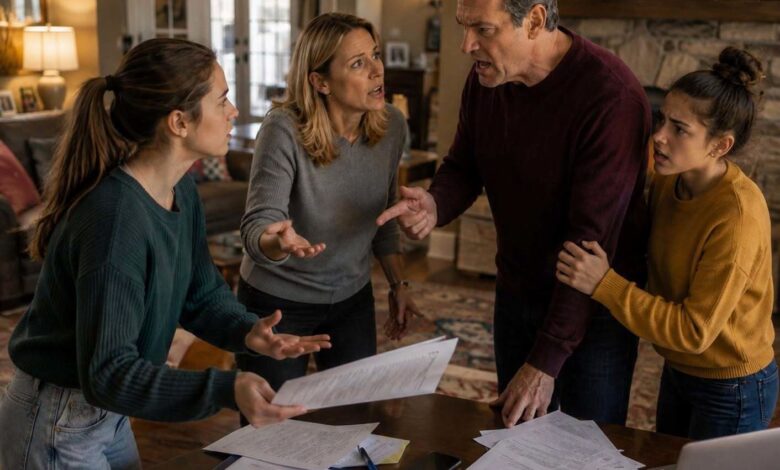
Six Million Dollars in a Greenwich Trust Fund Changed My Sister’s Life Forever
America Focus
My grandfather did not look at the dancers when he pressed the scrap of paper into my palm. He looked at the heavy brass lock on the ballroom terrace doors, his fingers dry and cold against my wrist.
The music from the five-piece band carried across the polished parquet floor of our Greenwich home, but his voice was barely a whisper.
“Memorize this number, Emma, and do not show it to your father.”
I twirled my grandmother’s gold signet ring around my pinky finger, a habit that always returned when my chest felt tight. The metal was cool, worn smooth by decades of her own anxious fingers.
“Why do I need an attorney’s number, Grandpa?” I asked, keeping my voice low.
He did not answer me directly. He turned his head toward the corner of the room, where Grandma’s old upright piano sat silent, buried under three separate floral arrangements of white lilies. My mother had insisted on covering the dark wood to match the party’s theme, hiding the instrument where I had spent my childhood learning simple duets.
“Just keep it in your head,” he rasped, his eyes fixed on the hidden keys. “Ten digits. Start now.”
He leaned heavily on his cane, his small pocket watch chain glinting against his dark waistcoat. I knew he kept the watch in his pocket even though the brass face had stopped turning three years ago.
“Is something wrong with the estate?” I asked, stepping closer to him so the passing waiters would not hear.
“Your father is a man who builds on sand, Emma,” he said, his voice carrying a dry, flat rattle. “And sand has a habit of shifting when the wind rises. Rebecca Shaw is the only person who will tell you the truth when the circle closes.”
He patted my hand once, a brief, dry touch, then turned toward the foyer.
I watched him go, his shoulders slightly hunched under his tailored suit.
I repeated the first three digits under my breath, matching the beat to the drums of the jazz band.
Two, zero, three.
The guests moved around me in a blur of silk and diamonds, their laughter sounding loud and hollow against the high ceiling.
I walked toward the main staircase, the scrap of paper burning against my palm.
On the hall table, sitting beside a stack of unopened mail, was a blue leather folder with the gold crest of my grandfather’s estate office.
I reached out and touched the cool leather, but the sound of footsteps on the stairs made me pull my hand back.
By ten o’clock, the ballroom had emptied of guests, leaving only the lingering smell of expensive perfume and the quiet hum of the cleanup crew in the distance.
I walked past the open door of my grandfather’s study and stopped.
Charles Bennett sat behind the massive mahogany desk, his heavy gold wristwatch catching the light as he signed a thick stack of documents.
“A bridge loan, Emma,” my father said, looking up with a boisterous grin that did not reach his eyes. “Six million dollars in short-term capital to finalize the ridge development. In three months, Bennett Development will own this entire valley.”
He adjusted his heavy watch strap, his fingers thick and tanned from his weekend golf games.
“We are on the cusp of something historic,” he said, leaning back in his leather chair. “A simple signature, and the bank releases the funds.”
I watched him slide the papers into a drawer, my finger still circling the signet ring on my pinky.
“Is Grandpa helping with the loan?” I asked.
My father laughed, a loud, hollow sound that echoed off the wood-paneled walls.
“Your grandfather belongs to the old world, sweetheart. We are building the new one. He does not understand the speed of modern development.”
He did not look at me as he locked the drawer with a small silver key.
“Go on up to bed,” he said, his voice returning to its usual commanding tone. “Your mother and I have details to finalize before the morning.”
I turned and walked down the quiet hallway toward the kitchen, the numbers still looping in my mind.
My mother, Beatrice, was standing by the marble island, adjusting a crystal vase that held a dozen white roses.
“Eighty dollars for these,” she murmured, her voice dripping with forced sweetness as she brushed an imaginary speck of lint from her green silk dress. “And they will probably be dead by Tuesday.”
She did not look at me, her fingers busy straightening a single stem.
“Your father is working very hard, Emma,” she said.
“I know,” I said. “He just signed the new loan papers.”
Beatrice paused, her hand hovering over the white petals.
“He has to,” she said softly. “The estate demands a certain standard. Your eighteenth birthday is next month, Emma.”
She turned her sharp gaze to me, her eyes scanning my face as if searching for something she had lost.
“We have spent so much securing your future,” she continued, her voice dropping to a low, rhythmic purr. “It is only right that we look after each other when the time comes.”
“What do you mean?” I asked.
“Your inheritance is a family responsibility,” she said, her smile returning like a mask. “We must protect it together. Your grandfather was always too cautious with his trusts.”
She picked up her glass of sparkling water and walked out of the kitchen, leaving me alone with the roses.
I stayed there for a long time, watching the water drip from a loose leaf onto the marble counter.
When I finally went upstairs to my bedroom, the house was completely silent.
I lay on my back, staring at the ceiling, trying to connect my father’s boasting with the cold weight of my grandfather’s warning.
My pinky finger felt heavy where the gold ring sat.
The silence in the room was absolute, broken only by the hum of the air conditioning.
I woke at seven the next morning to the buzzing of my phone on the nightstand.
A text message from my younger sister, Lily, sat on the screen.
Are we still getting the black luxury sedan next week?
I sat up and looked at my vanity table across the room.
Sitting next to my hairbrush was a stiff cardboard photograph of a black luxury sedan, a glossy promotional brochure from the dealership in town.
Lily must have left it there while I was downstairs.
I typed a short reply.
That is up to Dad.
The response came back almost instantly, the three dots dancing on the screen before her words appeared.
He said it depends on you.
I stared at the screen, my thumb hovering over the glass.
Why would a car for the family depend on my eighteenth birthday?
I stood up and walked to the window, looking down at the long gravel driveway.
My grandfather’s black town car was gone, having left in the middle of the night.
I opened my desk drawer and took out a scrap of paper, but it was blank.
I had already memorized the ten digits.
I sat back on the edge of my bed, the room still half-shadowed by the heavy drapes.
The numbers ran through my head like a chant.
Two, zero, three, five, five, five.
I lay back down on the pillow, pulling the heavy quilt over my shoulders to block out the morning light.
I repeated the ten digits of Rebecca Shaw’s phone number in the dark until the rhythm of the numbers put me to sleep.
The white paper lanterns on the terrace hummed with the heat of eighty lightbulbs, casting pale circles over the linen-covered tables of my eighteenth birthday party. I stood near the stone balustrade, twirling my grandmother’s gold signet ring around my pinky finger while the caterers carried away empty champagne flutes.
On the small glass table next to me, a dozen white roses in a crystal vase sat beside a silver cake server. The card attached to the roses had my mother’s elegant handwriting, though I knew she had simply called the florist on Greenwich Avenue and charged the eighty-dollar arrangement to my father’s corporate account.
Across the stone tiles, my mother, Beatrice, laughed at something a neighbor said, her silk dress catching the amber patio light. A pair of diamond earrings, each the size of a hazelnut, caught the reflection of the pool water and threw tiny, bright needles of white light across her collarbone. They were a gift from my father last Christmas, purchased during their brief trip to St. Barts when the business was supposedly thriving.
My father, Charles, stepped beside her and adjusted his heavy gold wristwatch, his chest puffed out under his tailored tuxedo. He whispered something into Beatrice’s ear, his boisterous smile vanishing for a fraction of a second as his eyes scanned the yard. He did not look at the guests, but rather toward the driveway where the caterers were loading their van.
“Emma, sweetheart, you are hiding in the shadows,” Beatrice said, her voice dripping with forced sweetness as she stepped away from the crowd to reach me.
“I was just looking at the lawn, Mother,” I said, speaking softly and in the precise sentences my grandfather had always encouraged.
“Well, do not look too long,” she said, brushing an imaginary piece of lint off her sleeve. “Your father wants to have a brief word with you in the study before the guests leave, just about some simple papers for tomorrow.”
“What papers?” I asked.
She did not answer, only patted my cheek with a cold, dry hand and turned back to the guests. I watched her go, the heavy scent of her perfume lingering in the warm night air.
Lily, my sixteen-year-old sister, came to stand beside me, her eyes darting between our parents and the driveway. She was biting her lower lip, her fingers nervously picking at her mascara-stained eyelashes.
“They are talking about the money again, aren’t they?” Lily whispered, her voice barely audible over the soft jazz playing from the terrace speakers.
“They are always talking about money, Lily,” I said.
“Mother told me we might go to Nantucket next week,” she said, her eyes widening slightly. “She said we just have to wait for your birthday to pass.”
I did not say anything, only turned my ring around my finger.
By ten o’clock, the music had died down to a low murmur, and the terrace was mostly empty. The last of the Greenwich neighbors had driven down the gravel driveway, leaving only the quiet hum of the outdoor refrigerator and the distant sound of the highway. I walked down the long oriental rug of the second-floor hallway, intending to find my father in his study, but stopped five feet from the heavy mahogany door.
The door was cracked open an inch, letting a thin wedge of yellow light cut across the dark floorboards.
“She has to sign the authorization by noon tomorrow, Charles,” Beatrice’s voice came through the gap, sharp and devoid of the warmth she had used on the terrace. “The bank in Nassau is already holding the draft.”
“Emma will sign whatever we put in front of her,” my father replied, his tone dismissive. “She has no idea how the trust is structured, and she trusts us.”
“She spent too much time with Arthur before he died,” Beatrice said, her voice rising slightly before she caught herself. “He was always whispering in her ear about independence.”
“Arthur is gone, and his estate is ours to manage,” Charles said, the sound of his gold watch clasp clicking in the quiet room. “The bridge loan is due on Monday. If we do not move the six million into the corporate account by then, the Greenwich project defaults, and Bennett Development goes under.”
“And the Nantucket property?” Beatrice asked.
“The purchase offer is already written,” he said. “We will clear enough from the restructuring to buy the beach house cash, but only if we get her signature before the probate office opens on Friday.”
I held my breath, my pinky finger freezing around my grandmother’s ring. My father’s development company, the source of our entire Greenwich lifestyle, was apparently nothing more than a hollow shell waiting for my inheritance to fill its cracks.
“What if she asks questions?” Beatrice whispered. “What if she wants to talk to Rebecca Shaw?”
“Rebecca has no standing unless Emma initiates a formal dispute,” Charles said, his voice flat. “And Emma won’t do that. She doesn’t have the stomach for a fight.”
I took a slow step backward into the shadow of a large vase of ferns, my leather heels making no sound on the thick runner.
I turned and walked quickly to my bedroom, locking the door behind me.
It was eleven o’clock when I sat at my small writing desk, my heart steady but cold. I pulled my grandfather’s silver-plated desk pen from its marble holder, the heavy metal cool against my fingers. The desk was quiet, illuminated only by the soft glow of my laptop and the small reading lamp in the corner.
I pulled up the secure portal on my phone, the screen illuminating my face in the dark room.
I dialed the ten-digit number I had memorized, the digits sliding easily from my memory.
“Rebecca Shaw,” the voice answered on the second ring, measured and dry, exactly as I remembered it from my grandfather’s office on Mason Street.
“It is Emma,” I said, my voice barely louder than a whisper. “I am eighteen today.”
“Happy birthday, Emma,” Rebecca said, her voice softening slightly. “Your grandfather made me promise to keep this line open for you tonight. He knew exactly what day it was.”
“I need to sign the electronic trust documents,” I said, unscrewing the silver-plated desk pen just to have something solid to hold. “I want the six million dollars moved into the independent trust immediately, where no one else can touch it.”
There was a brief pause on the other end, the quiet sound of paper rustling.
“I have the digital documents ready,” Rebecca said. “If you sign them now, the transfer of stewardship will execute at midnight.”
“Send them,” I said.
“You understand that once this is done, your father will no longer have any oversight,” Rebecca said. “He will receive a notification of the transfer within minutes.”
“I know,” I said.
The link appeared on my screen ten seconds later. I used my finger to sign the electronic registry, my signature looking small and clean against the blue background.
“It is done, Emma,” Rebecca said. “The funds are officially under the sole control of the trust, and I am your designated trustee. Your parents cannot access a single dollar without my co-signature.”
“Thank you, Rebecca,” I said.
“Sleep well, child,” she said. “The real work begins in the morning.”
I hung up the phone and set it on the nightstand, but sleep did not come easily.
At exactly six in the morning, a soft chime from my phone woke me from a light, restless drift.
I picked up the screen and saw three separate transaction alerts from the family banking portal.
Three electronic transfers of two million dollars each had been initiated at exactly six o’clock, all of them marked as rejected due to insufficient administrative privileges.
Who had attempted the three bank transfers at six in the morning?
I stared at the rejected alerts, knowing the bank security team would already be flagging the activity. My father had not even waited for the sun to rise before trying to empty the accounts.
At seven o’clock, I walked down to the kitchen, the air inside the house smelling faintly of stale coffee and old flowers. The large room was bright with the early morning light, but it felt cold.
Beatrice stood by the marble island, pouring hot water into a ceramic mug.
She was wearing her silk morning robe, but as she turned her head toward me, I noticed something wrong.
Only one stunning diamond earring hung from her left ear lobe, the right ear bare and slightly red.
“Good morning, birthday girl,” she said, her voice tight, though she tried to smile.
“Good morning, Mother,” I said, taking a glass from the cupboard. “Did you lose something?”
Her hand went instinctively to her right ear, her fingers brushing the empty lobe.
“It must be upstairs,” she said quickly, her eyes darting toward the hallway. “I probably left it on my vanity last night.”
Lily sat at the breakfast table, her eyes red-rimmed as she stared at her lap. She was clutching her yellow password diary tightly against her chest, her knuckles white. Inside that little book, she kept the recovery codes and password hints for all the family’s shared financial accounts.
“Lily, are you alright?” I asked, taking a seat opposite her.
Lily bit her lower lip and pulled at her mascara-stained eyelashes, her shoulders tense.
“I am fine,” she whispered, her voice trailing off as she glanced toward our mother.
“Your sister is just tired, Emma,” Beatrice said, her voice dropping the forced sweetness entirely. “We all have a very busy day ahead of us.”
“I saw some alerts on my phone this morning,” I said, watching Beatrice’s face closely.
Beatrice stopped pouring the water, her back turning rigid under her robe.
“What kind of alerts?” she asked, without turning around.
“Some transfer attempts,” I said. “Three of them, at six o’clock.”
Lily gasped slightly, her yellow diary slipping an inch in her hands before she gripped it tighter.
“There must have been a system glitch,” Beatrice said, finally turning to face me with a tight, empty expression. “Your father will look into it.”
I looked down at the slice of glazed birthday cake left on the counter from the night before, its white frosting slightly cracked under the kitchen lights.
It was the realization that the sweet taste of my birthday cake was the last honest thing in this house.
The morning light came through the heavy linen drapes in pale, thin stripes, casting long shadows across my bedroom floor.
The door clicked and then flew inward, the brass knob hitting the drywall with a sharp crack that shook my grandmother’s silver-framed mirror on the wall. My father stood in the threshold, his tie undone and his heavy gold wristwatch catching the morning light as he pointed a finger at me.
“Where is it, Emma?” he said, his voice dropping the boisterous tone he used for clients. “The bank flagged the transfer. Six million dollars does not just vanish from an estate account overnight.”
I pulled the duvet up to my collar, my thumb instantly finding my grandmother’s gold signet ring on my pinky finger and twirling it. “I moved it to a trust, Dad. Rebecca Shaw helped me set it up yesterday.”
He walked three steps into my room, his leather shoes heavy on the hardwood floor, and stopped at the foot of my bed. “You had no right to touch that money without consulting me first.”
“It was Grandpa’s wish,” I said, keeping my voice as flat and level as I could. “He wanted me to secure my future.”
“Your future is this family,” he said, adjusting his watch with a quick, nervous jerk of his hand. “And right now, this family has bills to pay. You are going to fix this before the bank closes today.”
“I cannot fix it,” I said. “The trust is locked.”
“Your mother and I have spent years building Bennett Development,” he said, his voice tightening as he stepped closer. “Every dinner party, every country club membership, every single trip we took was designed to position this family where we belong. And you think you can just lock the gates because of some old man’s grudge?”
“It was not a grudge, Dad,” I said, keeping my hands steady under the blanket. “Grandpa knew how you operated. He told me to protect myself.”
“He was seventy-eight years old and losing his grip,” my father said, his fingers tapping against his heavy gold watch. “He was paranoid, Emma. And it looks like it runs in the family.”
“I am not paranoid,” I said. “I am just following his instructions.”
“We will see how those instructions hold up when the bills start arriving,” he said, turning back toward the door.
He stared at me for five long seconds, his chest rising and falling under his white dress shirt, before he turned on his heel and walked out, leaving the door wide open.
I sat there in the quiet of my room, listening to the heavy tread of his footsteps fading down the long hallway toward his study.
I got out of bed and walked over to the dresser, my toes sinking into the thick wool rug. The silver-framed mirror still trembled slightly from the impact of the door.
From down the hall, I heard my mother’s bedroom door open, followed by the soft, rhythmic brushing sound of her slippers on the runner. They were awake, and they had been talking before my father ever came up the stairs.
I dressed quickly in an old grey sweater and pair of jeans, my hands cold as I pulled my hair back. There was no sound of breakfast being made downstairs, no clatter of plates or the hum of the espresso machine that usually filled the kitchen by eight.
When I reached the top of the stairs, I could hear my father’s voice again, muffled by the heavy oak door of his study. He was talking to someone, his tone sharp and impatient, the corporate confidence entirely gone.
I walked down the hallway, each step deliberate, until I stood outside the study door.
“She has to sign it,” my father was saying to someone inside. “If she does not sign the bridge loan by noon, the bank is going to freeze the construction accounts on the Stamford project.”
“She will sign,” my mother’s voice replied, flat and cold. “We just need to show her what happens if she does not.”
I took a breath and knocked on the wood, the sound loud in the quiet hallway.
My father was sitting behind his mahogany desk when I pushed the door open. A single sheet of paper was laid out exactly in the center of the green leather blotter, next to a silver pen.
My mother stood by the tall window, her back to me, her fingers tracing the edge of the heavy velvet drapes.
“Sit down, Emma,” my father said, pointing to the leather chair opposite him.
I sat on the very edge of the cushion, my hands folded in my lap, my pinky finger still turning the gold ring.
“This is a family investment agreement,” he said, sliding the paper across the desk toward me. “It authorizes a short-term bridge loan from your trust to Bennett Development. It is standard corporate restructuring.”
I looked down at the document. The language was dense, filled with terms like subordinated debt and capital allocation, but the bottom line was clear. It wanted me to sign away control of four million dollars.
“Why four million?” I asked, looking up. “The trust is six million.”
“We need four to clear the outstanding liabilities on the Stamford phase,” my father said, his voice returning to its normal, boisterous pitch. “The other two million will remain in your account as a reserve. It is a perfectly safe transition.”
“And if the Stamford project fails?” I asked.
My mother laughed from the window, a short, sharp sound without any humor in it. “Bennett Development does not fail, Emma. Your father has been running this company since before you were born.”
“He has been running it into debt,” I said, looking directly at her.
The room went completely silent. My mother’s hand stopped on the heavy velvet curtain, her fingers locking into the fabric. My father leaned forward, his eyes narrowing until they were small, dark slits.
“You have no idea what it takes to maintain this life,” my mother said, her voice dropping its forced sweetness entirely. “The house, the reputation, the school you go to. It all depends on this company.”
“Then maybe we should have lived in a smaller house,” I said.
“I do not think Rebecca would want me to sign this,” I added, looking at the paper.
“Rebecca Shaw is an attorney, not a businessman,” my father said, leaning forward and resting his elbows on the desk. “She does not understand how leverage works.”
“You already spent the money, did you not?” I asked, looking him in the eyes. “The three transfer attempts this morning at six. That was you.”
His face flushed red, the corporate jargon slipping away for a fraction of a second. “You promised to help this family, Emma.”
“I promised Grandpa I would be careful,” I said, pushing the paper back across the polished wood. “I am not signing this.”
“You are eighteen years old,” he said, his voice rising, commanding. “You do not know the first thing about managing this kind of wealth. If Bennett Development defaults, we lose this house.”
“Then we lose it,” I said, standing up from the leather chair.
He reached for the paper, folding it in half with a sharp crease that sounded like a dry branch snapping. “We will see what your mother has to say about that.”
He stood up, his tall frame blocking the light from the window. He did not touch me, but the sheer size of him in the small study made the room feel tight, the air thick with the smell of old paper and leather.
“Your grandfather was an old man who did not understand the modern market, Emma,” he said, his voice dropping to a low, warning register. “He left you that money because he knew I would manage it for you.”
“He left it to me because he did not trust you,” I said, the words coming out before I could stop them.
My father’s hand stayed on the folded paper, his fingers turning white at the knuckles. “You have thirty minutes to think about this. If you do not sign, there are other ways to protect our assets.”
“What does that mean?” I asked.
He did not answer. He just pointed toward the door, his heavy gold watch flashing once more in the dim light of the study.
I went back upstairs to my room and locked the door, but thirty minutes later, there was a frantic knock. It was not my father’s heavy fist, but a light, rapid tapping that I knew belonged to my sister.
I unlocked the deadbolt, and Lily pushed past me, her eyes red-rimmed and her lower lip trembling as she clutched a stiff cardboard photograph to her chest.
“How could you do this?” she whispered, her voice cracking as she held up the photograph of the black luxury sedan. “Dad said we have to cancel the order. He said we cannot afford the deposit now because of you.”
“The sedan was never our money to spend, Lily,” I said, sitting on the edge of my bed. “It belongs to the trust.”
“You do not care about this family at all,” she said, biting her lower lip and pulling at her mascara-stained eyelashes. “You just want to keep everything for yourself so you can leave us behind.”
I looked at her, remembering the hot summer nights when the thunderstorms rolled over Greenwich and she would creep into my bed, shivering and crying until the rain stopped.
“I am trying to protect us, Lily,” I said, reaching out to touch her arm. “Dad’s company is in trouble. If I give him the money, it will all go to pay his old debts, and there will be nothing left.”
“He said you are being selfish,” she said, pulling her arm away from me. “He said you are acting crazy, just like Grandma did before she had to go away.”
“Grandma was not crazy,” I said. “She was just tired of being used.”
“You are ruining my life,” Lily said, her voice rising to a high, thin pitch. “I was supposed to get that car for my seventeenth birthday. Everyone at school already knows about it.”
She looked down at the photograph in her hands, her fingers denting the stiff cardboard edges.
“Did you know about the other account, Lily?” I asked, watching her face closely.
“What other account?” she said, her voice trailing off as she looked toward the window. “I do not know what you are talking about.”
“The one in your name,” I said. “The one they used when you were eleven.”
“I was eleven, Emma,” she said, her eyes wide and wet. “I did not have a bank account. I had a piggy bank.”
She turned back to the door, her shoulders shaking slightly as she held the cardboard photograph against her ribs.
“If you do not sign that paper, Dad says they are going to take away my phone too,” she said, his voice dropping to a whisper. “He said we will have to move to a smaller place, somewhere where everyone will know we are broke.”
“We are not broke, Lily,” I said. “But the money is mine, and it is staying in the trust.”
“I hate you,” she said, though her voice lacked the anger she was trying to force into it. “I wish you never turned eighteen.”
From the hallway, the sound of my mother’s voice drifted up the stairs, sharp and dripping with that forced sweetness she used when she was trying to convince a Greenwich zoning commissioner to approve a tennis court.
Lily and I walked out to the staircase landing, looking down through the white wooden balusters into the grand foyer below.
My mother was pacing the black and white marble floor, a cordless telephone pressed to her ear, her free hand brushing imaginary lint off her green silk designer dress.
“Yes, Julian,” my mother was saying, her voice low but carrying perfectly up the open stairwell. “She has been showing signs of extreme paranoia since her birthday. She is convinced we are trying to steal from her.”
Lily looked at me, her brow furrowing as she leaned against the banister. “Who is Julian?” she whispered.
I shook my head, my hand gripping the wooden railing. “I think he is a cousin of Mom’s, or maybe one of her old college friends.”
“She is completely unstable, Julian,” my mother continued, stopping in front of the hallway mirror to adjust her hair. “We need a formal evaluation as soon as possible. The probate court is going to require professional documentation if we are going to secure the guardianship by Friday.”
I felt a cold sensation in the pit of my stomach, my fingers tightening on my grandmother’s gold ring until the metal bit into my skin.
“We have to protect her from her own worst impulses,” my mother said into the phone, her voice dropping to a confidential whisper as she turned toward the kitchen. “I will have Charles send over the preliminary files this afternoon.”
She disappeared around the corner, her high heels clicking against the hardwood floor of the kitchen.
Lily turned to me, her face pale under the hallway lights, and held out the photograph of the black luxury sedan. “Is she talking about you, Emma?”
I did not answer her, my eyes fixed on the empty foyer where my mother had just been standing.
Lily’s hand opened, and the stiff cardboard photograph of the black sedan slipped from her fingers, fluttering onto the bedroom carpet like a dead leaf.
My mother did not look up from her needlepoint when I walked into the parlor at noon. She sat in the high-backed armchair by the cold fireplace, her fingers moving with steady, rhythmic precision. On the low table beside her sat a fresh silver platter containing two glasses of iced tea that had already begun to sweat in the humid air.
“Sit down, Emma,” she said, her voice dropping into that quiet, rehearsed register she used for difficult staff.
I remained standing near the piano, my grandmother’s gold signet ring heavy on my pinky finger. I did not want to sit. If I sat, I would look like a child waiting for a lecture, and I was eighteen years old as of yesterday.
“I am not signing the family investment agreement, Mother,” I said, keeping my words even and slow. “I spoke with Rebecca Shaw this morning. The six million dollars from Grandfather Arthur is being moved into a private trust.”
My mother finally paused, her needle hovering a fraction of an inch above the canvas. Her face did not slip, but her gaze hardened into something resembling slate.
“We are doing this to protect you from your own worst impulses,” she said, her tone dripping with a sudden, forced sweetness that made my neck go cold. “A girl of your temperament cannot possibly navigate this kind of sudden exposure.”
“My temperament is perfectly fine,” I said.
“You have always been fragile, Emma,” she said, resuming her stitching. “The anxiety, the quiet spells, the way you pull away from the family. If you dump this wealth into a private structure where your father cannot manage it, you will destroy our standing in this town within a month.”
She pulled the green wool thread tight, her knuckles showing white against her rings.
“The money stays in the trust,” I said.
She did not argue further, which was her first mistake. She simply reached for her iced tea and took a slow, deliberate sip. The ice clinked against the crystal, a sharp, lonely sound in the large room.
“We will see what the professionals have to say about your capacity,” she murmured.
The grandfather clock in the hallway did not tick, but the digital display on my phone showed exactly one o’clock when the screen lit up with Rebecca Shaw’s office number. I slipped into the small coat closet under the stairs to answer it, breathing in the scent of wool coats and cedar.
“Emma,” Rebecca said, her voice measured and dry over the receiver. “I need you to listen carefully. The bank just notified me. There were three massive transfer attempts made against your grandfather’s primary account early this morning.”
“How massive?” I asked.
“Two million dollars each,” Rebecca said. “They were initiated at six o’clock today, using electronic routing. The bank blocked them because the trust transition papers we lodged at midnight were already active.”
My breath caught in my throat, though I kept my hand still against the wooden coat rack.
“Who tried to move it?” I asked.
“The credentials used were registered to your father’s office computer,” Rebecca said. “But they also had a digital copy of a power of attorney. We need to know if you signed anything recently, even a blank sheet.”
“I signed nothing,” I said.
“They are going to push back, Emma,” Rebecca said, her voice carrying a rare edge of professional frustration. “Charles is desperate. If those transfers had gone through, the money would have been in an offshore account before breakfast.”
“What do I do now?” I asked.
“Stay in the house if you must, but do not sign a single scrap of paper,” she said. “I am drafting a formal warning to their corporate counsel now.”
She hung up, and the dial tone filled the dark closet.
The door to my father’s study was wide open at two o’clock. He was standing behind his mahogany desk, his heavy gold wristwatch catching the light as he sorted through a stack of blue folders. When he saw me, he did not bluster or shout. He simply pointed at the leather chair across from him.
“Sit down, Emma,” he said.
I stood in the doorway, my fingers locked behind my back.
“Rebecca’s office called,” I said.
My father smiled, a thin, paper-dry stretch of his lips. He reached into his center drawer and pulled out a single sheet of heavy white bond paper. He slid it across the polished wood toward my side of the desk.
“Then she should have told you about this,” he said.
I looked down at the paper. It was a standard power of attorney, granting Charles Bennett full authority over all my financial assets, including the estate of Arthur Bennett. At the bottom of the page, in dark blue ink, was my signature.
“I never signed that,” I said.
“The document is fully notarized, Emma,” he said, adjusting his watch band. “It was executed three days ago. It gives me the legal right to manage your grandfather’s bequest to keep Bennett Development solvent.”
“It is a forgery,” I said, my voice rising slightly.
“A court will look at the signature, not your sudden buyer’s remorse,” he said.
I reached out and picked up the paper, my thumb pressing against the bottom margin. The paper felt stiff and cold. In the lower left corner, there was a circular purple ink impression from a physical notary stamp, bearing the name of a local clerk who had worked for my father’s firm for ten years.
“Where is the stamp, Father?” I asked, looking him directly in the eyes. “The physical stamp used to mark this.”
He did not answer. He merely closed his desk drawer with a sharp click that echoed in the quiet room.
By three o’clock, the afternoon shadows had stretched across the marble countertops in the kitchen. My mother was standing by the copper sink, holding a blue ceramic mug of hot tea. Lily sat at the breakfast bar, her yellow password diary clutched tightly against her ribs, her mascara smudged under her eyes as she stared at the floor.
“You have made this very difficult for yourself, Emma,” my mother said, her voice smooth and devoid of any maternal warmth.
“I have not done anything,” I said, leaning against the doorframe.
“We have just filed the formal petition with the probate court,” she said, taking a sip of her tea. “The hearing is scheduled for Friday at two in the afternoon.”
“What petition?” I asked.
“A petition for emergency guardianship,” my mother said. “Dr. Julian Vance has already provided a preliminary clinical evaluation. He agrees that your recent erratic behavior and emotional instability make you a danger to your own financial preservation.”
I looked at Lily, but my sister only bit her lower lip and pulled at her eyelashes, refusing to meet my gaze.
“Dr. Vance has never even met me,” I said, the words tasting like ash in my mouth.
“He has reviewed your history,” my mother said. “The school reports, the sessions after your fifteen-year-old medical issues, the statements we provided. On Friday, a judge will place your affairs under our direct supervision. The six million dollars will be managed by your father, where it belongs.”
She set her mug down on the counter with a soft, final thud.
“We are doing this because we love you,” she added, though her eyes remained perfectly cold.
I looked down at the copy of the power of attorney still clutched in my left hand. My thumb ran over the blue ink of my name. The loops of the ‘E’ and the double ‘m’ were identical to my usual handwriting, a perfect replica of the script I had practiced hundreds of times in my school notebooks.
But as I held the paper up to the kitchen light, I noticed the back of the sheet was completely smooth. My grandfather’s silver-plated desk pen always left a deep, heavy indentation in the paper, a physical groove that you could feel with your fingertips even years later. This ink sat entirely on the surface, light and uniform, without a single trace of the pressure my hand always made.
Rebecca Shaw took the document from my hand, her expression remaining entirely neutral as she laid it flat on the mahogany desk. She did not say a word for several seconds, her eyes scanning the forged signature that had bypassed my own fingers.
She pulled a silk handkerchief from her drawer and began to clean her wire-rimmed glasses. Without them, her eyes looked smaller, but they did not lose their sharp, assessing focus on the paperwork.
“This is a standard statutory form they downloaded from the state portal,” Rebecca said, her voice dry and measured. “Your father did not even bother to use a local notary he actually knows. He used an online service registered to an address in Hartford.”
I twirled my grandmother’s gold signet ring around my pinky finger, keeping my eyes on the edge of the desk. “Can they use it to take the six million?”
“Not while I am breathing,” Rebecca said. She put her glasses back on and leaned forward, resting her elbows on the desk. “I worked for your grandfather for thirty years, Emma, and I will not let them undo his final act.”
The warmth in her voice was unexpected, a sudden contrast to the cold draft coming from the office window. It was the first time since my eighteenth birthday that anyone had spoken to me without trying to calculate my net worth.
“But we have to be smart,” Rebecca continued, tapping the edge of the forged power of attorney. “They have filed a petition for temporary guardianship, and they are claiming you are incapable of managing your own affairs.”
“I am eighteen,” I said, my voice barely louder than the hum of the small radiator under the desk. “I have the right to my own life.”
“Legally, yes,” Rebecca said. “But until a judge reviews this, your assets are in jeopardy, and the easiest way to protect the trust is to request a voluntary freeze on all your accounts.”
I looked down at the blue leather trust folder sitting between us. “A freeze?”
“It means you will not have access to a single dollar of your grandfather’s money for your daily expenses,” Rebecca said. “No credit cards, no cash withdrawals, nothing until the probate court hears our case on Friday.”
“How am I supposed to buy food?” I asked.
“I will advance you a small personal loan for the week,” Rebecca said, opening a drawer and pulling out a silver-plated desk pen. “But you must agree to this constraint, because it is the only way to prove to the court that you are acting with absolute financial caution.”
She pushed a white sheet of paper toward me, the text requesting the immediate suspension of all trust activity.
I took the silver-plated pen, its weight heavy and cool against my fingers, and signed my name at the bottom. I pressed down hard, leaving a deep impression in the paper that no machine could easily replicate.
Rebecca nodded, taking the paper back. “Now we go to the police.”
The Greenwich police precinct smelled of floor wax, wet wool coats, and stale coffee. Detective Marisol Vega sat across from us in a small room with yellowing walls, tapping her legal pad with a blue ballpoint pen.
She looked at the copy of the forged power of attorney Rebecca had provided, her face showing no surprise at all.
“The bank flagged three transfer attempts at six this morning,” Detective Vega said, her voice a flat monotone. “Each one was for exactly nine hundred thousand dollars, directed to an offshore account in the Caymans.”
“My father told me his development company was doing well,” I said.
“Your father’s company has three active liens against it,” Detective Vega said, without looking up from her pad. “He has been borrowing from one project to pay the interest on another for eighteen months.”
She turned her pen over, tapping the eraser end against the yellow paper. “Did you authorize anyone to access your online banking passwords, Emma?”
“No,” I said. “I kept them in my desk.”
“Your sister Lily has a yellow diary,” Detective Vega said. “Does she keep passwords in it?”
“I do not know,” I said, though a cold feeling began to settle in my chest as I pictured Lily biting her lower lip and pulling at her mascara-stained eyelashes.
“We will need a formal statement from you regarding the forgery,” Detective Vega said, sliding a typed form across the table. “Once we have this, we can open a criminal fraud file.”
I took the blue pen from the detective and signed my name.
“What happens to my parents now?” I asked.
“We investigate,” Detective Vega said. “But you should know that a guardianship petition is a civil matter, and if a doctor has signed off on your instability, the court might still grant your parents temporary control before we can finish our fraud investigation.”
The dusk was grey and thick when we left the precinct, the damp air smelling of wet asphalt. Rebecca drove her small sedan down the hill toward Mason Street, her hands steady on the steering wheel.
As we passed the rear parking lot of the local community clinic, Rebecca slowed the car down and pulled over against the curb.
“Is that your mother’s car?” Rebecca asked, pointing toward the far corner of the lot.
My mother’s silver SUV was parked three spaces away, but she was sitting in the passenger side of a dark blue sedan parked under a dead oak tree.
A man with thinning silver hair was sitting in the driver’s seat of the sedan, running his fingers through his hair while my mother brushed imaginary lint off her silk designer dress.
“That is Dr. Julian Vance,” Rebecca said, her voice dropping an octave. “He is a licensed psychologist in town who often does evaluations for the family court.”
Through the glass, I saw Dr. Vance hand my mother a thick white envelope. She opened it, glanced at the papers inside, and then handed him a smaller, thicker envelope of her own.
My mother smiled, a sharp, forced expression that I had seen her use on a hundred different dinner guests in Greenwich.
“Why is she meeting him in a parking lot?” I asked, my chest tightening as I watched the transaction.
“Because a legitimate medical evaluation requires a clinical office,” Rebecca said. “And it usually requires the patient to actually be in the room.”
“Can he really declare me incompetent?” I asked. “He has never even spoken to me.”
“He has a medical license, Emma,” Rebecca said, her eyes following the blue sedan as it slowly backed out of its space. “To a probate judge who does not know your family, his signature carries weight.”
I watched the red taillights of my mother’s SUV disappear around the corner of the building. I wondered what my mother had promised him in that smaller envelope, and how far she was willing to go to get her hands on my grandfather’s legacy.
The house on Round Hill Road was completely quiet when I walked inside. The eighty-dollar white roses my mother had bought for my birthday were still sitting in their crystal vase on the hall table, but their petals had started to curl at the edges.
I went upstairs to my bedroom and pulled my old canvas suitcase from the top of the closet.
I began packing my clothes, choosing the plainest sweaters and jeans I owned and leaving the designer dresses hanging in the closet.
Every object in the room seemed to belong to a person I did not know anymore. The silver-framed photographs of family vacations to Nantucket looked like pictures of strangers.
Lily came to my door, holding her yellow diary against her chest. Her mascara was smudged, and she was biting her lower lip so hard it was white.
“Are you really leaving, Emma?” she asked, her voice trailing off.
“I cannot stay here, Lily,” I said, placing a folded green sweater into the suitcase.
“Dad says you are trying to ruin us,” she whispered. “He says if you do not sign the investment agreement, the company will go under.”
“The company was already going under,” I said, keeping my voice quiet and deliberate.
Lily pulled at her eyelashes, looking down at her shoes. “They said we were going to get a black sedan, and they said everything would be fine.”
“They were choosing what they could make you do, Lily,” I said.
She did not answer, turning and walking down the hallway, leaving my bedroom door wide open.
I zipped the suitcase shut, the sound loud in the quiet house.
I drove back to Mason Street, the heavy suitcase sitting in my passenger seat as the streetlights began to flicker on. The lights in Rebecca’s office were still burning, casting long yellow rectangles onto the dark sidewalk.
Rebecca opened the door before I could knock, her face lined with fatigue.
“I have the final voluntary freeze documents ready,” she said, motioning for me to sit.
I set my car keys on the desk beside her silver-plated pen. “My mother met Dr. Vance again tonight, or at least I saw his car leave her driveway as I was leaving.”
Rebecca did not look surprised, picking up the blue leather trust folder and checking the seals on the plastic sleeves.
“We will present the bank records first,” Rebecca said. “If the judge sees the unauthorized transfer attempts from this morning, any evaluation Vance signed will look like a coordinated cover-up.”
She closed the folder with a firm, quiet snap.
“This will be a long week, Emma,” Rebecca said, looking at me with a warmth that reminded me of my grandfather. “But we have the truth on our side.”
She stood up and walked over to the heavy steel safe in the corner of the room, spinning the brass dial three times.
She placed the blue leather trust folder inside, sliding it onto the top shelf before locking the heavy steel office safe.
The steel door shut with a heavy, dull thud.
“We will face them in court on Friday,” Rebecca said, her fingers releasing the dial.
But by eight the next morning, the battleground had shifted back to the white linen tablecloth of our Greenwich dining room, which was set for three.
My mother poured black coffee from the silver carafe into a porcelain cup, her movements smooth and unhurried. She wore a simple blue linen dress today, and both of her earlobes were completely bare.
My father sat opposite her, his tie slightly loosened and his collar unbuttoned. He had a stack of unopened mail sitting beside his plate, the envelopes thick and white.
“We have been talking, Emma,” my father said, adjusting his heavy gold wristwatch. “Your mother and I want to find a way through this without involving the courts.”
He slid a small plate of dry toast toward my side of the table, his boisterous voice dialed down to an unfamiliar, gentle murmur.
“We are willing to drop the guardianship petition entirely,” my mother said. She offered a warm, tentative smile that did not show her teeth. “On one simple condition.”
I kept my hands flat on my lap, my thumb circling my grandmother’s gold signet ring on my pinky finger. “What condition?”
“A joint account,” my father said, leaning forward and resting his forearms on the table. “We put your grandfather’s six million into a shared family trust. Three signatures required for any major withdrawal. It protects your future, and it keeps our family business whole.”
“It means we do not have to air our private family business in public, Emma,” my mother added, her voice dripping with forced sweetness. “We can manage this together, as a family.”
“I have already moved the money to Rebecca’s firm,” I said, my voice barely above a whisper.
My father’s smile tightened, the skin around his jaw turning white. “And Rebecca can move it back. We can call her together.”
“A three-way signature card is a standard wealth management tool,” my father explained, his voice returning to a smooth, administrative cadence. “It means no single person can touch the principal without the other two consenting.”
“If it requires three signatures, how does that help your business?” I asked.
“The bank will accept the trust as collateral for our short-term liabilities,” my father said. “We do not even have to spend the money, Emma. We just need it sitting there to secure our lines of credit.”
I looked down at the empty white plate. The silence stretched between us, heavy and full of unsaid threats.
“Think about it,” my mother said, placing her hand gently over mine. Her palm was dry and warm. “We only want what is best for you.”
“The hearing is on Friday,” I said, looking from her to my father.
“We can cancel it by noon today,” my father replied. “A single phone call to the probate judge’s clerk is all it takes.”
He leaned back, his chair creaking slightly against the hardwood floor.
“We want to put this behind us,” he said. “We want our daughter back.”
I looked at the silver coffee pot, the steam rising in a thin, fragile line.
By ten o’clock, my father called me into his study.
The room smelled of old leather and furniture polish. He sat behind his large mahogany desk, a stack of white papers spread out before him in neat, parallel columns.
“Sit down, Emma,” he said, tapping a finger against the dark wood.
I sat in the leather chair opposite him, my boots clicking against the hardwood floor.
“These are the family liabilities,” he said, sliding a three-page document across the desk toward me. “The commitments your grandfather agreed to help us cover before he passed.”
I picked up the papers. The top sheet listed a series of personal loans, country club dues, and property taxes on the Round Hill Road house totaling over four hundred thousand dollars.
“Grandpa did not agree to pay for your country club fees,” I said, reading the neat rows of numbers.
“He understood the necessity of maintaining our position, Emma,” my father said, his voice rising slightly before he caught himself. “Our family’s reputation is what keeps Bennett Development afloat. If we fall, you fall with us.”
He adjusted his watch again, the heavy metal band catching the morning light.
“If you do not help us clear these debts, the banks will come after this house,” he said. “Your sister’s future, your mother’s security, it all rests on your decision.”
“You have twelve thousand dollars listed here for a landscaping company,” I said, pointing to the middle of the first page.
“We have to maintain the grounds, Emma,” he said. “If the hedge at the front gate looks neglected, our creditors notice. In this town, appearance is currency.”
“And seventy-four thousand dollars for a personal line of credit?”
“A bridge, Emma,” he said. “Just a temporary bridge to cover payroll for the development team.”
“And my college tuition?” I asked.
“That will be taken care of once we clear these immediate hurdles,” he said.
I looked at the signature line at the bottom of the last page, which was blank.
“I need to show this to Rebecca,” I said.
My father reached out and took the papers back, his movements swift and deliberate.
“We do not need Rebecca for this,” he said, sliding the pages into his desk drawer.
“Why is there a line for my signature if it is just a list of family debts?” I asked.
“It is a formal acknowledgment of the family’s financial structure,” he said, his voice dropping back to that low, reasonable tone. “A formality to show the lenders we are aligned.”
I watched his hand rest on the brass drawer handle, the metal cold and silent.
At noon, I walked out onto the veranda to get some fresh air.
The air was still, the garden below us looking dry and overgrown after a long summer. My mother appeared from the kitchen carrying a tray with two porcelain cups of tea.
“I brought you some chamomile,” she said, setting the tray down on the small wicker table.
She sat in the chair opposite me, smoothing the skirt of her blue dress with both hands.
“I know this has been incredibly difficult for you, Emma,” she said, looking out over the lawn. “But you must understand where your father and I are coming from.”
I wrapped my fingers around the warm cup, not drinking.
“When I was your age, my father lost everything in a bad real estate venture in New Jersey,” she said, her voice dropping to a soft, reflective tone. “We had to sell our home in the middle of the night. I had to leave my school, my friends, everything I knew. I swore I would never let that happen to my own children.”
She looked back at me, her eyes shining with what looked like genuine tears.
“Everything we have done, even the things that seem harsh, has been to protect you and Lily from that kind of poverty,” she said. “We cannot go back to that.”
“Is that why you wanted me to have the trust?” I asked.
“Your grandfather meant well, but he did not understand the realities of our current business,” she said. “He was retired. He was safe. We are still in the arena, Emma.”
For a brief moment, the anger inside me softened, replaced by a quiet, aching wish that she was telling the truth.
“Let us put the lawyers away, Emma, and just be a family again,” she said.
She reached across the table and touched my wrist, her touch light and pleading.
“I want that too,” I said, the words slipping out before I could stop them.
“Then tell Rebecca to release the hold on the funds,” she said. “Just the portion we need to clear the immediate debts. We can handle the rest together.”
I withdrew my hand slowly, the warmth of her touch fading. “I will think about it.”
At two in the afternoon, I was back in my bedroom when the door opened.
Lily stood in the doorway, her yellow password diary clutched tightly against her chest. Her mascara was slightly smudged under her eyes, and she was biting her lower lip.
“Emma,” she said, stepping inside and closing the door behind her. “Please.”
She walked over to my bed and sat down on the edge, her shoulders slumped.
“They are fighting downstairs,” she whispered. “Dad says if you don’t sign the joint account papers, we are going to lose the Nantucket house. He said we won’t even be able to afford the move.”
“Lily, they forged my signature,” I said, sitting at my desk.
“They did it for us,” she said, her voice rising, trailing off as she looked at the floor. “They were just trying to save the company. If the company goes under, everything is over. We won’t have anything.”
She reached out and took my hand, pulling at her eyelashes with her other hand.
“Dad was crying this morning, Emma,” Lily said. “I have never seen him cry before. He was sitting in the kitchen at five in the morning with the lights off.”
“He is trying to scare you, Lily,” I said.
“No, he is terrified,” she said. “We all are. If they take this house, where do we go? Aunt Sarah’s place in Vermont? I can’t live there. I don’t want to change schools.”
“They forged my name on a legal document,” I said.
“But nothing happened,” she pleaded, pulling at her eyelashes again. “The bank stopped it anyway. So why can’t we just make it legal now? It solves everything.”
“If you just agree to the joint account, we can go to Nantucket next month,” she said. “Like we used to. We can just forget all of this happened.”
I looked at my sister, wanting so badly to believe that she was just a frightened sixteen-year-old girl who wanted her family back.
“I want to go to Nantucket too,” I said softly.
“Then just sign it,” she begged. “Please, Emma. For me.”
I told her I would talk to our father again.
I went down the hall to the study, the carpet muffling my footsteps. The door was slightly ajar, and I could hear my father’s voice inside, low and urgent.
“We only need three weeks,” he was saying into his phone. “Once the court dismisses the petition, we can access the joint account and cover the bridge loan before the default notice is filed.”
I stopped in the doorway, my breath shallow.
My father was standing by his desk, his back to me. He held a thick, cream-colored document in his hand, one I had not seen before.
“The extension is already signed on our end,” he muttered into the receiver. “Just hold the bank off until Friday.”
He hung up the phone and immediately slid the cream-colored document into the top drawer of his desk.
He closed the drawer with a firm, deliberate push.
The cold click of Charles’s desk drawer lock, sounding like a trap snapping shut.
The heavy quiet of our house ended at exactly nine the next morning. Detective Vega stood on the stone portico, her blue legal pad tucked under her arm. Beside her stood Rebecca Shaw, holding a manila folder, and two uniformed Greenwich police officers whose silver badges caught the pale autumn light. My mother, Beatrice, stood in the center of the foyer, her hand frozen on the collar of her cream-colored linen blouse.
“This is a search warrant, Mrs. Bennett,” Detective Vega said, her voice flat and even.
She handed a three-page document to my mother, who did not take it, letting the paper hover in the air until Rebecca caught it. My father, Charles, appeared at the top of the stairs, his heavy gold wristwatch catching the overhead light.
“What is the meaning of this intrusion?” he demanded, his voice boisterous but thin.
Detective Vega did not look up at him; she simply stepped past my mother into the black-and-white tiled foyer. “We are here to search the study, Mr. Bennett,” she said, gesturing to the officers.
My father descended the stairs slowly, his hand sliding along the mahogany banister. He adjusted his watch twice before he reached the bottom step.
“There is nothing in my study that concerns the police,” he said, trying to summon his usual commanding tone.
“The bank records of the unauthorized transfer attempts say otherwise,” Rebecca said, not looking at him as she opened her manila folder.
My mother brushed an imaginary piece of lint off her sleeve, her fingers moving in quick, sharp strokes. “This is a private family matter, Rebecca. You have no right to bring these people into our home.”
“The state of Connecticut disagrees, Beatrice,” Rebecca said, her voice dry and measured.
The two officers moved toward the study down the hall, their heavy boots silent on the Persian rug. My father watched them go, his face darkening.
“You are making a terrible mistake, Emma,” my father said, turning his gaze to me as I stood near the dining room door. “This will ruin the Bennett name in Greenwich.”
“The Bennett name is already ruined, Charles,” Rebecca said.
I twirled my grandmother’s signet ring around my pinky finger, keeping my eyes on the floor.
By ten o’clock, the study was a mess of pulled drawers and stacked papers. My father’s desk, usually immaculate, was covered in bank statements and tax filings from the past five years. Detective Vega sat behind the mahogany desk, while Lily sat on the leather sofa, her fingers pulling at her mascara-stained eyelashes.
“Lily,” Detective Vega said, tapping her blue ballpoint pen on the yellow legal pad. “I need you to show me the yellow book you keep in your bedroom drawer.”
Lily bit her lip and looked at my mother, who was leaning against the bookshelf, her face tight. “I don’t know what you’re talking about,” Lily said, her voice trailing off.
“Go get it, Lily,” Rebecca Shaw said from the corner, her wire-rimmed glasses resting on the bridge of her nose.
My sister did not move for a long moment, her eyes darting toward the door where one of the officers stood. Finally, she stood up and left the room, returning five minutes later with the yellow password diary.
She handed it to Detective Vega, who flipped through the lined pages until she reached the back cover.
“These are Emma’s bank passwords,” Detective Vega said, showing the page to Rebecca. “Written in a child’s hand.”
“I had to write them down,” Lily said quickly, her voice rising. “He told me to.”
“Who told you, Lily?” Detective Vega asked, her voice flat and monotone.
My mother took a step forward, her face pale. “Lily, do not say another word without our family lawyer present.”
“Rebecca is my lawyer, Mother,” I said, twirling my grandmother’s signet ring around my pinky finger. “And she is here.”
“We need to know when you copied these, Lily,” Detective Vega said, ignoring the interruption.
“The night of the birthday party,” Lily whispered.
We moved out to the foyer staircase at eleven, where the air was slightly cooler. Lily sat on the third step, her knees pulled up to her chest, her face pale.
“He made me do it,” Lily whispered, her voice trailing off as she looked down at her canvas sneakers.
“Who made you, Lily?” I asked, sitting two steps below her, my hands flat on the cold wood.
“Dad,” she said, her voice cracking. “During your birthday party, when everyone was on the terrace, he told me to go to your computer and copy the login codes from your notebook into my diary.”
She looked at my father, who was standing by the front door with one of the officers, his eyes fixed on the floor.
“He said it was for a family investment,” Lily said. “He told me if I didn’t do it, we would lose the house and wouldn’t be able to go to Nantucket.”
My mother smoothed her dress and turned her back to us, staring out the sidelight window. “Lily, you are exaggerating a simple request.”
“It wasn’t a simple request, Beatrice,” Rebecca said, walking out of the study with a stack of papers. “It was the preparation for three unauthorized bank transfers at six in the morning.”
“I didn’t know they were going to transfer the money,” Lily sobbed, pulling at her eyelashes. “I thought it was just to look.”
“You copied the passwords so they could forge Emma’s signature on the power of attorney,” Detective Vega said, standing at the base of the stairs.
Lily looked at me, her eyes desperate. “I didn’t want to do it, Emma. He said we would be ruined if I didn’t help.”
“And you believed him,” I said.
“He’s our father, Emma,” Lily said, her voice breaking. “What was I supposed to do?”
By noon, we were in the kitchen. Rebecca Shaw laid three blue leather folders on the granite island next to a cup of lukewarm black coffee.
“There is something else we found in the bank records, Emma,” Rebecca said, cleaning her glasses with her silk handkerchief.
She pointed to a line on a financial ledger from seven years ago, showing a transfer of thirty thousand dollars.
“A second account was opened at the Greenwich Savings Bank in Lily’s name when she was eleven years old,” Rebecca said.
My heart seemed to stop as I looked at the signature card on the document.
“Three hundred eighty thousand dollars was moved through that account over seven years,” Rebecca said, her voice flat. “It came directly from your childhood medical and education trust.”
I looked at Lily, my anger rising like a physical heat. “You’ve been helping them steal from me since you were eleven?”
“I did not open that account, Emma, I swear I was only eleven,” Lily said, her voice high and desperate.
She reached out to touch my arm, but I stepped back, my hand hitting the edge of the granite counter.
“The account has Beatrice and Charles as the authorized signers,” Rebecca said, looking up from the paper. “But it was opened using Lily’s social security number and name.”
My mother did not look at either of us; she kept her eyes on the window overlooking the gardens.