Part 3: The Dead Man’s Secret 005
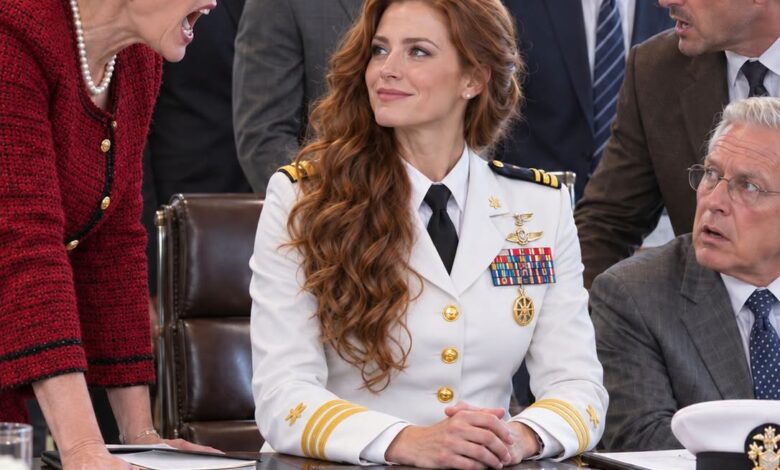
The name on the financial transfer stopped my heart cold.
I stared at the document Margaret Chen had emailed me, my coffee growing cold beside my laptop. The transaction was clear: $250,000 transferred to an account registered to Dr. Harold Reeves —my father’s cardiologist, the man who had signed his death certificate, the physician who had vanished without a trace three weeks after my father’s funeral.
But Harold Reeves had been declared dead six months before my father’s heart attack.
I read the file three times, certain I had misunderstood. But the evidence was undeniable. Someone had been using a dead man’s identity to kill my father.
My phone rang at 6:47 AM. Margaret Chen’s voice was tense. “You saw the file?”
“I saw it. How is this possible?”
“That’s what I’m trying to figure out. Harold Reeves supposedly died in a boating accident off Cape Cod. Body was never recovered. But somehow, his medical license remained active, and someone was writing prescriptions under his name.”
“Someone who wanted my father dead.”
“Someone who knew exactly how to make it look natural.” Chen paused. “Alyssa, there’s something else. I ran the shell company that paid for the medication. It traces back to a holding corporation in Delaware. And that corporation… it’s owned by a trust.”
“Whose trust?”
“The Gregory Prescott Family Trust. Established by your father. But the trustee listed isn’t your father.”
I gripped the edge of my desk. “Who?”
“Your mother.”
The revelation hit me like a physical blow. My mother—already facing decades in prison for fraud and embezzlement—had potentially orchestrated my father’s murder. But something didn’t fit.
“Why would she kill him?” I asked. “She was already stealing from the company. The fraud was working. Killing him would only draw attention.”
“Unless he found out,” Chen said quietly. “Unless he threatened to expose everything.”
I thought back to the blue ledger, to the meticulous documentation my father had compiled. He had known about the fraud for years. He had been preparing to act. Maybe he had confronted my mother. Maybe that confrontation had sealed his fate.
“I need to see her,” I said. “I need to look her in the eye and ask her if she killed my father.”
The Rhode Island Women’s Correctional Facility was a gray concrete building that seemed to absorb all light and hope. I sat in a sterile visitation room, waiting for my mother to appear.
When she walked in, shackled and wearing prison scrubs, I barely recognized her. The elegant, calculating woman who had tried to rob me of my inheritance was gone. In her place was a hollow-eyed stranger who looked twenty years older than the last time I had seen her.
“Hello, Alyssa.” Her voice was flat, defeated.
“Hello, Mother.”
We stared at each other across the metal table. The silence stretched between us like a chasm.
“I need to ask you something,” I said finally. “And I need you to tell me the truth.”
Florence Prescott laughed bitterly. “The truth? That’s a luxury I haven’t had in a long time.”
“Did you kill Dad?”
The question hung in the air like a guillotine blade. My mother’s face went through a series of emotions—shock, anger, and then something I hadn’t expected: genuine confusion.
“What? No. No, I didn’t kill him. I stole from him, lied to him, manipulated him—but I didn’t kill him.”
“You expect me to believe that?”
“I expect you to believe whatever you want.” She leaned forward, her eyes suddenly fierce. “But I loved your father. In my own twisted way, I loved him. I would never have killed him.”
“Then who did?”
My mother was silent for a long moment. Then she said something that changed everything.
“Ask your Uncle Robert.”
Part 4: The Uncle Who Never Existed
I didn’t have an Uncle Robert.
I spent the drive back to Providence trying to remember if my father had ever mentioned a brother. There were no photographs, no family stories, no holiday gatherings. Gregory Prescott had been an only child—or so I had always believed.
But when I called Margaret Chen from the car, she confirmed the impossible.
“Robert Prescott. Born 1961, five years after your father. Died in a car accident in 1994.”
“Dying isn’t the same as dead,” I said, remembering Dr. Reeves. “What if he faked his death too?”
“Then we’re dealing with something much bigger than a family dispute.”
The next morning, I drove to my father’s attorney’s office in downtown Providence. Arthur Delgado was seventy-three years old, semiretired, and the only person my father had trusted completely. He had been the one to contact Margaret Chen six months before my father’s death. He had been the one to hold the blue ledger in safekeeping.
He was also, according to his receptionist, missing.
“Mr. Delgado hasn’t been in the office for three days,” the young woman said nervously. “He said he was going to his cabin in Vermont. But he never arrived.”
My blood ran cold. “Did he say anything else? Anything unusual?”
She hesitated. “He said… he said if anyone came looking for him, I should give them this.”
She handed me a sealed envelope with my name on it.
I opened it in my car, my hands trembling. Inside was a single sheet of paper in Arthur’s precise handwriting:
Alyssa,
If you’re reading this, I’m probably dead. Robert found out I had the ledger. He knows everything.
Your father didn’t die of a heart attack. He was poisoned. The medication was administered by someone he trusted—someone who had access to his food, his drinks, his daily routine.
It wasn’t your mother. She’s a thief, but she’s not a killer.
The person who murdered your father has been hiding in plain sight for thirty years. He changed his name, changed his face, and waited for the right moment to strike.
Look at the photographs in the Providence house. The ones from your grandmother’s 80th birthday. There’s a man in the background—tall, gray hair, standing near the garden. That’s him.
That’s Robert.
He wants the company. He wants everything. And he’s willing to kill anyone who gets in his way.
I’m sorry I couldn’t protect you better.
Run, Alyssa. Run.
Part 5: The Face in the Photograph
I found the photograph in my grandmother’s attic.
It was tucked inside a dusty album, hidden behind pages of family weddings and christenings and summer vacations. The image was grainy, faded, but the man in the background was unmistakable.
Tall. Gray-haired. Standing apart from the crowd, watching.
I stared at his face, searching for something familiar, something that would explain how this stranger could be my father’s brother. And then I saw it: the same sharp jawline, the same intense eyes, the same slight crookedness to his smile.
Robert Prescott. My uncle. The man who had supposedly died thirty years ago.
The man who had killed my father.
I photographed the image and sent it to Margaret Chen. Her response came within minutes.
“We ran facial recognition. The man in the photo matches a current identity: Richard Harmon, CEO of Harmon Industries. He’s a respected businessman, philanthropist, and—”
“And what?”
“He’s on the board of Prescott Regional Builders.”
The floor seemed to drop out from under me. Robert had infiltrated the company years ago, positioning himself close to my father, waiting for the perfect moment to strike. He had probably been the one to introduce Christopher to my mother, encouraging the fraud, using their greed as a distraction while he planned something far more sinister.
“Where is he now?” I demanded.
“He’s at the Providence house. He’s been there for the past hour.”
I drove like a woman possessed, breaking every speed limit between my office and the historic home my father had left me. The house where I had played as a child. The house where my father had been murdered.
The lights were on when I arrived. His car—a black Mercedes with Rhode Island plates—was parked in the driveway. I didn’t bother calling the police. This was between me and the man who had destroyed my family.
I found him in the study, standing before my father’s desk, holding the blue ledger in his hands.
“Hello, Alyssa,” Robert said, turning to face me. He looked exactly like the photograph—older, but unmistakably the same man. “I was wondering when you’d figure it out.”
“You killed him.”
“I did what was necessary.” He set the ledger down carefully. “Gregory was going to expose everything. The fraud, the embezzlement, the shell companies. He was going to destroy thirty years of work.”
“Work? You murdered your own brother!”
“He was never my brother!” Robert’s voice cracked like a whip. “He was my competitor. My rival. My enemy. From the moment we were born, he was the golden child, the favorite, the one who got everything. The company. The inheritance. The love of our parents.”
“So you faked your death. You waited. You plotted.”
“I waited thirty years for the perfect moment. And it was perfect, wasn’t it? Your mother and her idiot husband took the fall for the fraud. You were too busy playing soldier to notice what was happening. And your father…” He smiled coldly. “Your father died thinking his family had betrayed him. It was poetic justice.”
Part 6: The Trap
I had walked into the lion’s den, and Robert knew it.
“You’re going to kill me too,” I said calmly. “Just like you killed Dad.”
“I’m afraid so.” He reached into his jacket and withdrew a syringe. “The same medication, actually. Untraceable. The coroner will rule it a heart attack, just like your father. And the grieving daughter will be buried beside her beloved dad.”
“Except I’m not going to let that happen.”
I moved faster than he expected. Years of military training had honed my reflexes to a razor’s edge. I ducked under his arm, grabbed his wrist, and twisted hard. The syringe clattered to the floor.
Robert was stronger than he looked. He threw me against the bookshelf, sending volumes crashing to the ground. I rolled, came up swinging, and caught him in the jaw with a right hook that would have made my combat instructor proud.
“You think you can beat me?” he snarled, blood dripping from his lip. “I’ve been planning this for three decades!”
“And I’ve been fighting for my life since I was seventeen!” I grabbed the brass fireplace poker and swung it like a bat. It connected with his shoulder, and he howled in pain.
But he didn’t stop. He lunged at me, and we crashed through the French doors, spilling onto the back patio. The cold night air hit my face as we wrestled on the stone tiles, each of us fighting for control.
Then I heard the sirens.
Margaret Chen had tracked my phone. She had known I would come here. And she had brought backup.
Robert heard them too. His eyes widened, and for the first time, I saw fear in his face.
“It’s over,” I said. “You’re done.”
He looked at me—really looked at me—and something shifted in his expression. Not remorse. Not regret. Recognition.
“You’re just like him,” he whispered. “Just like Gregory. You never give up.”
“No,” I said. “I’m better than him. I finish what I start.”
Part 7: The Reckoning
The trial of Robert Prescott—aka Richard Harmon—was the most sensational case Rhode Island had seen in decades.
The evidence was overwhelming. The blue ledger. The financial records. The testimony of Dr. Harold Reeves, who had been living in hiding under an assumed name, terrified that Robert would find him. And finally, my mother’s testimony, which she gave in exchange for a reduced sentence.
“He approached me fifteen years ago,” she said, her voice steady for the first time in months. “He told me he could help me take control of the company. He said Gregory was weak, that he didn’t deserve what he had. I didn’t know he was going to kill him. I swear I didn’t know.”
The jury deliberated for only four hours. Robert Prescott was found guilty of first-degree murder, attempted murder, fraud, and conspiracy. He was sentenced to life in prison without the possibility of parole.
My mother received a reduced sentence of eight years for her cooperation. Christopher got twelve. Lucas was cleared of all charges.
Part 8: The Legacy
One year later, I stood on the steps of the Providence house, watching the sun rise over the Atlantic.
The house had been restored—new paint, new windows, new life. The company had been restructured, renamed Prescott Family Enterprises, and was now a model of ethical business practices. Lucas had proven himself a capable and honest executive, overseeing the restaurant division with a dedication that surprised everyone, including himself.
My mother wrote to me from prison. Her letters were short, tentative, filled with apologies I wasn’t ready to accept. But I read them. I kept them. Maybe someday I would write back.
And then there was Marcus.
Marcus Chen, Margaret’s son, was a former Navy SEAL who had helped with the investigation. We had met during the trial, bonded over shared experiences of service and sacrifice, and somewhere between the depositions and the verdicts, we had fallen in love.
He stood beside me now, his hand warm in mine, as the first rays of sunlight painted the sky gold and pink.
“You did it,” he said. “You won.”
“We won,” I corrected. “All of us.”
My father’s legacy was safe. His name was cleared. And his killers were behind bars.
But the greatest gift my father had left me wasn’t the house, the company, or the fortune. It was the knowledge that I was strong enough to fight for what was right—and wise enough to know when to let love in.
I looked at the portrait of my grandmother, hanging in the front hall. She smiled down at me, a woman who had known her own share of battles.
“What now?” Marcus asked.
I smiled, feeling the weight of the past year lift from my shoulders.
“Now we live.”