Pauline Potter Lost Hundreds of Pounds After a Guinness World Record — Her Final Chapter Was Heartbreaking
# Pauline Potter Lost Hundreds of Pounds After a Guinness World Record — Her Final Chapter Was Heartbreaking
For years, Pauline Potter was known around the world because of a number on a scale.
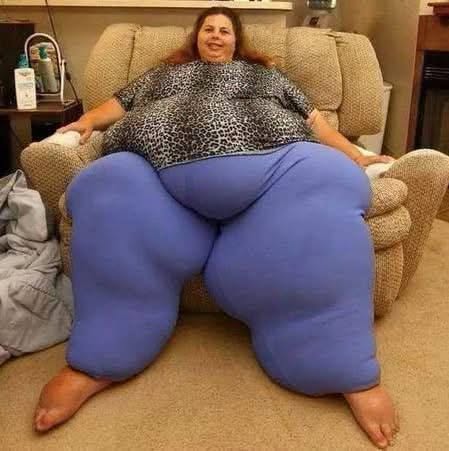
In 2011, Guinness World Records recognized her as the world’s heaviest living woman after documenting her weight at 643 pounds.
Her story attracted international attention.
Television producers wanted interviews. News outlets wanted photographs. Strangers discussed her appearance, her health, and her personal decisions.
But behind the extraordinary headlines was a woman who desperately wanted her life to change.
Pauline struggled with everyday activities that most people rarely think about.
Getting dressed could be exhausting. Walking short distances was painful. Even leaving the house required planning.
She eventually turned to medical professionals for help, documenting her experience on TLC’s *My 600-lb Life*.
Her journey would involve major weight loss, surgery, difficult setbacks, and years of medical challenges.
At one point, she reported weighing just 226 pounds, a remarkable change from her earlier recorded weight.
Her transformation became a source of inspiration for viewers who had followed her story.
But there was a final chapter that many older articles have never acknowledged.
**Pauline Potter died on November 27, 2025, at the age of 62.**
Her death came after a difficult year involving a serious car accident and multiple health complications.
To understand her story, it is important to remember both her extraordinary progress and the struggles that remained.
## A Childhood Shaped by Food and Family
Pauline grew up in a family where food played an important role in daily life.
During an interview with Guinness World Records in 2011, she described how food had been used to celebrate happy moments and comfort people during difficult ones.
She explained that several relatives also lived with severe obesity.
Her mother and father had both reached unusually high weights, according to Pauline’s account.
For her, eating was connected to habits established during childhood.
Those habits followed her into adulthood.
By the time she became a mother herself, Pauline was already experiencing significant weight-related difficulties.
Her son, Dillon, would later become one of the most important people in her life.
As her mobility declined, he increasingly helped her with daily responsibilities.
Their relationship became an important part of the television series that eventually introduced Pauline to a wider audience.
## Why She Contacted Guinness World Records
Most people associate Guinness World Records with extraordinary achievements.
Pauline’s motivation for contacting the organization was different.
She wanted help.
In September 2011, Guinness confirmed that the California resident had weighed 643 pounds.
Pauline was 47 at the time.
She explained that she hoped the attention would encourage a medical professional to assist her.
She had previously attempted to contact prominent television personalities, including doctors who regularly appeared on daytime programs.
According to her account, those efforts had not produced the assistance she needed.
Becoming a record holder was therefore not simply about publicity.
She hoped it would lead to treatment.
The announcement brought widespread media coverage, but the attention also placed her personal circumstances under intense scrutiny.
## Everyday Life Had Become Increasingly Difficult
At her highest reported weight, Pauline experienced major mobility limitations.
She described difficulty bathing, dressing, and moving around.
Walking even short distances could be exhausting.
She used a mobility scooter and participated in warm-water rehabilitation exercises to help maintain movement.
Her physical challenges affected her independence.
Activities such as shopping or traveling required considerable effort.
She also experienced persistent pain.
During a 2011 television interview with Dr. Drew Pinsky, Pauline spoke openly about her concerns.
She understood that her health was at risk and wanted to make changes while she still could.
Her willingness to discuss those problems publicly became central to her story.
It also revealed that the attention surrounding her record did not necessarily translate into immediate medical improvement.
She still needed treatment, support, and a plan that could address her circumstances.
## Her Appearance on My 600-lb Life
In February 2015, Pauline appeared during the third season of TLC’s *My 600-lb Life*.
The series followed people experiencing severe obesity as they sought treatment from Houston-based bariatric surgeon Dr. Younan Nowzaradan.
Known to audiences as Dr. Now, the physician worked with patients facing complex medical and mobility challenges.
Pauline entered the program weighing approximately 673 pounds, according to later television summaries.
Her treatment was not straightforward.
She struggled with changes to her eating habits and encountered disagreements with her doctor.
The program documented difficult conversations about accountability, treatment goals, and the importance of following medical recommendations.
Her journey showed that major weight loss was not a simple matter of deciding to eat differently.
It involved medical care, longstanding habits, physical limitations, and psychological challenges.
## Surgery Was Only Part of the Process
Pauline eventually underwent bariatric surgery.
The procedure helped support substantial weight loss, but it did not eliminate every difficulty.
She continued facing problems with mobility, pain, and maintaining changes to her routine.
At one point, she acknowledged that surgery could alter the body’s digestive capacity without automatically changing every habit or emotional response connected to eating.
That distinction became an important part of her experience.
Bariatric surgery can be an effective treatment for certain patients with severe obesity.
However, it requires appropriate medical assessment and ongoing follow-up.
Patients may need nutritional monitoring, behavioral support, and treatment for other medical conditions.
Pauline’s experience demonstrated how demanding that process could become.
Her progress did not follow a perfectly smooth path.
There were setbacks as well as achievements.
## The Transformation That Surprised Viewers
Over time, Pauline began making significant progress.
Later episodes and updates showed dramatic changes in her appearance and mobility.
She also underwent skin-removal surgery as part of her treatment journey.
In 2019, further procedures were reported as she continued addressing complications associated with her earlier weight.
By 2020, the transformation had become extraordinary.
Pauline reported on Facebook that she weighed approximately 226 pounds.
Compared with her original Guinness measurement of 643 pounds, that represented a reduction of more than 400 pounds.
Other reports used different starting and ending weights, producing varying estimates of her total weight loss.
Some later articles claimed that she had lost more than 500 pounds.
However, the exact total depends on which measurements and dates are being compared.
The important confirmed development was that she had experienced an enormous transformation over several years.
## Why the Number 518 Needs Context
The viral story frequently states that Pauline lost exactly 518 pounds.
That figure has appeared in entertainment articles and retrospective summaries.
But it is not consistently supported by a single authenticated sequence of medical measurements.
Her recorded and self-reported weights changed at different stages of her treatment.
In 2011, Guinness recorded her at 643 pounds.
During later interviews, she described weighing around 700 pounds at one point.
Her weight at the start of *My 600-lb Life* was also different from her original Guinness measurement.
By 2020, she reported weighing 226 pounds.
Other retrospective accounts describe additional changes.
It is therefore more accurate to say that Pauline lost hundreds of pounds than to present one exact total without explaining its source.
Her achievement remains significant without relying on a potentially misleading number.
## The Emotional Side of Her Progress
For viewers, the physical changes were immediately visible.
But Pauline’s journey involved more than appearance.
Weight loss affected her mobility, independence, and relationship with everyday activities.
She had spent years relying on assistance with tasks many people perform without thinking.
Improved mobility could provide opportunities for greater independence.
Her son Dillon had witnessed the challenges she faced.
He also supported her through various stages of treatment.
Their relationship sometimes reflected the strain that serious health problems can place on families.
Caregiving can involve physical work, emotional stress, and difficult decisions.
Pauline’s progress therefore mattered not only to her but also to the people who had helped her during her most difficult years.
## Success Did Not Erase Every Health Problem
The transformation made Pauline one of the most memorable participants in *My 600-lb Life*.
But losing a substantial amount of weight did not mean every medical condition had disappeared.
She continued dealing with health concerns and physical limitations.
Earlier reporting described complications that required additional treatment.
Her experiences challenged the idea that a dramatic change in appearance automatically produces perfect health.
Medical outcomes depend on numerous factors.
Longstanding conditions, previous injuries, nutritional difficulties, and other medical problems may continue requiring attention.
Pauline’s story was therefore more complicated than a simple before-and-after photograph.
The weight loss was real.
So were the challenges that remained.
## The Car Accident in January 2025
A particularly difficult period began in January 2025.
According to Dillon, he and Pauline were involved in a motor vehicle collision.
Their vehicle struck a truck trailer.
Both sustained injuries.
Pauline suffered broken ribs and other physical injuries.
Dillon later described how the accident marked the beginning of an especially difficult year for his mother.
As the months passed, she experienced additional medical problems.
Her family reported digestive difficulties and problems keeping food and fluids down.
She required repeated medical attention.
The situation gradually became more serious.
Although the collision was an important event in the family’s account, it would be inaccurate to conclude that the accident alone caused her eventual death.
## The Health Complications That Followed
According to her son’s account, Pauline developed significant digestive problems during 2025.
She was eventually diagnosed with an obstruction affecting her esophagus.
Dillon also reported that she contracted COVID-19 during the period of declining health.
Medical professionals discovered a serious wound on her back that required treatment.
Her son described complications involving nutrition and the difficulty of managing several health problems simultaneously.
Over time, her condition deteriorated.
The family faced increasingly difficult decisions concerning her care.
In November, Pauline was discharged to hospice care.
Hospice is generally intended to provide comfort and support to people facing serious, life-limiting illness.
For her family, it marked a painful transition from seeking further recovery to prioritizing comfort.
## Her Final Days
Pauline spent her final days receiving hospice care at a relative’s home.
Her son later explained that her condition fluctuated.
There were periods when she was awake and able to communicate.
At other times, she experienced pain and significant discomfort.
On Thanksgiving Day, November 27, 2025, Dillon learned that his mother had died.
She was 62.
He subsequently shared the news publicly.
In interviews and online updates, he discussed the difficulties she had experienced during her final year.
However, he also explained that he did not have an official written cause of death.
For that reason, it would be inaccurate to attribute her death definitively to the car accident, obesity, COVID-19, or any single medical condition.
Her final months involved several serious health problems, but the complete medical explanation has not been publicly established.
## A Life That Cannot Be Reduced to Her Weight
Throughout much of her public life, Pauline was described through numbers.
Her weight made her a Guinness record holder.
Her treatment made her a reality television personality.
And her transformation attracted attention because of how dramatically those numbers changed.
But she was also a mother, a family member, and a woman who wanted greater independence.
She enjoyed social activities, shopping, and spending time with friends.
She spoke about her struggles because she hoped doing so would lead to help.
Her story involved difficult decisions, setbacks, progress, and circumstances that were not always within her control.
Reducing her life to a photograph comparing her appearance before and after weight loss misses much of what made her experience meaningful.
The most important part was not simply that her body changed.
It was that she continued seeking ways to improve her life despite significant obstacles.
## What Her Story Leaves Behind
Pauline Potter’s journey attracted public attention for nearly fifteen years.
In 2011, she contacted Guinness World Records because she hoped someone could help her.
In 2015, she sought treatment on *My 600-lb Life*.
Over the following years, she experienced major weight loss and shared her progress with viewers.
But in 2025, her health deteriorated, and she died after a difficult series of medical complications.
Her story is neither a simple triumph nor a failure.
It is the account of a woman who faced severe medical challenges, received treatment, made substantial progress, and continued dealing with health problems.
**Pauline Potter became famous because of how much she weighed. But her lasting story is about the years she spent trying to regain control of her health, her independence, and her future.**
Her transformation deserves to be remembered.
So does the woman behind it.
*Editor’s note: Pauline Potter died on November 27, 2025. This article incorporates that development and distinguishes publicly documented measurements from unverified weight-loss totals.*