This Is Not An Edited Photo. Look Closer And Try Not To Gasp… See More 👇👇👇
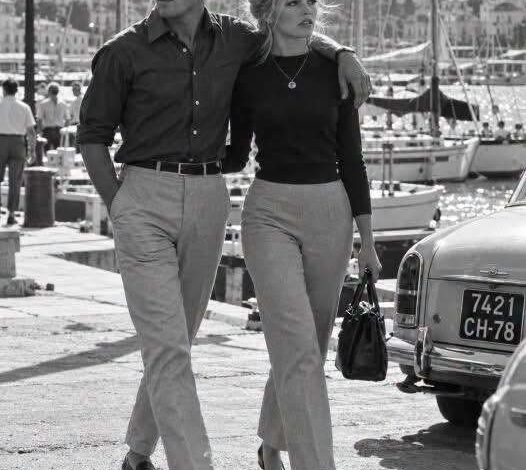
# Brigitte Bardot and Jacques Charrier: The Love Story Behind Their Glamorous 1950s Photos
In the late 1950s, few women could capture the world’s attention quite like Brigitte Bardot.
With her tousled blonde hair, effortless French style, and unmistakable screen presence, she had become an international symbol of beauty and independence.
Photographers followed her through the streets of Paris, along the French Riviera, and into the fashionable world of Saint-Tropez.
Every appearance seemed to create another unforgettable image.
But some of the most fascinating photographs from that period show Bardot beside a young French actor named Jacques Charrier.
In those images, the pair appeared to embody everything the public associated with romance in the 1950s: youth, glamour, affection, and the promise of an exciting future.
Their relationship attracted enormous attention, and their wedding in June 1959 became a major celebrity event.
Yet the story behind those photographs was far more complicated than the smiles suggested.
Their marriage would bring a child, intense public scrutiny, personal difficulties, and an eventual separation.
Decades later, the photographs remain beautiful reminders of a celebrated era in French cinema.
But they also tell a larger story about the difference between a moment captured by a camera and the realities of two people’s lives.
## Brigitte Bardot Before the World Knew Her Name
Brigitte Bardot was born in Paris on September 28, 1934.
Long before becoming an international movie star, she studied ballet and worked as a model.
Her striking appearance attracted attention while she was still a teenager.
In 1950, she appeared on the cover of *Elle*, an opportunity that helped open doors in the French entertainment industry.
She began appearing in films during the early 1950s, gradually developing a career that would transform her into one of Europe’s most recognizable actresses.
Her early professional life also brought her into contact with Roger Vadim, the filmmaker she married in 1952.
Vadim would later direct the movie that dramatically changed Bardot’s career.
Although she had already appeared in several productions, international fame arrived with the release of *And God Created Woman* in 1956.
The film presented Bardot in a way that challenged many established ideas about femininity and sexuality.
Her character’s independence and unapologetic confidence helped make her a cultural phenomenon.
The movie also contributed to the growing international fascination with Saint-Tropez.
Bardot’s image became inseparable from the Mediterranean town’s beaches, sunlight, and increasingly fashionable atmosphere.
By the end of the decade, she was no longer simply a successful French actress.
She was an international celebrity whose personal life attracted almost as much attention as her films.
## The Saint-Tropez That Became Part of Her Legend
Today, Saint-Tropez is famous around the world as a luxurious destination associated with celebrities, yachts, beaches, and designer fashion.
But its international reputation was still developing during Bardot’s early career.
The town had long attracted artists and visitors drawn to its Mediterranean setting.
During the 1950s, however, its association with French cinema helped introduce it to a much wider audience.
Bardot became one of the most recognizable figures connected with that transformation.
Photographs of her relaxing outdoors, walking through town, or enjoying the coastline helped establish an enduring image of French Riviera glamour.
Her clothing contributed to the fascination.
Simple summer dresses, casual tops, beachwear, and loosely styled hair gave her appearance a relaxed quality that contrasted with more formal celebrity fashion.
For admirers, Bardot represented an effortless kind of elegance.
Yet the lifestyle shown in those photographs offered only part of the picture.
The same attention that made her famous also reduced her opportunities for privacy.
Journalists and photographers followed her relationships closely.
Personal decisions became subjects of public debate.
A holiday or casual outing could quickly become international entertainment news.
That was the world into which Jacques Charrier entered.
## Who Was Jacques Charrier?
Jacques Charrier was born on November 6, 1936, in Metz, France.
Before becoming an actor, he studied decorative arts and developed an interest in ceramics.
He later moved toward theater and film.
His early acting career included training and stage experience before he gained significant recognition through Marcel Carné’s 1958 film *Les Tricheurs*, released internationally as *The Cheaters*.
The movie explored the lives and relationships of young people in postwar France.
Its success helped establish Charrier as a promising young performer.
His appearance and screen presence also attracted attention, making him a familiar figure among French cinema audiences.
Like Bardot, he represented a younger generation of actors working during a period of cultural change.
Their careers brought them together around the production of *Babette Goes to War*, a comedy directed by Christian-Jaque and released in 1959.
The film provided an important professional connection between the two performers.
Their romantic relationship developed around the same period.
By the summer of 1959, they were among the most closely watched couples in French entertainment.
## A Romance Captured by Photographers
Images of Bardot and Charrier from the late 1950s continue to circulate because they capture an extraordinary moment in their careers.
Both were young.
Both were becoming increasingly famous.
And together they appeared to represent the glamour associated with European cinema.
Photographers documented their appearances, public outings, and eventual marriage.
In some images, they stand close together with relaxed smiles.
In others, they are surrounded by journalists or spectators eager to catch a glimpse of the famous couple.
These photographs can create an impression of a carefree romance.
However, identifying the precise date of a particular image requires reliable archival information.
Some photographs associated with their relationship were taken during 1959, including images from the filming of *Babette Goes to War* and their wedding.
Without the original photograph or its archival caption, an image should not automatically be labeled as having been taken in 1958.
That distinction matters when telling a historical story.
A photograph is evidence of a moment.
It cannot, by itself, establish everything that was happening in the people’s private lives.
## Their June 1959 Wedding Became a National Event
On June 18, 1959, Brigitte Bardot and Jacques Charrier married in Louveciennes, near Paris.
Bardot was 24, while Charrier was 22.
It was her second marriage.
The wedding attracted enormous attention from photographers, journalists, and curious onlookers.
Reuters archival footage documented crowds gathering outside Bardot’s parents’ home following the ceremony.
Although the couple had attempted to keep arrangements relatively private, the event quickly became a major media spectacle.
One detail of the wedding became especially memorable.
Instead of wearing a conventional elaborate white bridal gown, Bardot chose a pink gingham dress designed by Jacques Esterel.
The full-skirted dress, with its distinctive checked fabric, became an enduring reference in fashion history.
Its relaxed, youthful appearance suited Bardot’s public image.
Photographs of the couple from the wedding remain among the most recognizable images of their relationship.
The setting, the clothes, and the excitement surrounding the ceremony helped turn the wedding into a defining celebrity moment of 1959.
But marriage also meant navigating a level of scrutiny that few couples experience.
Their private lives were increasingly treated as public entertainment.
## The Birth of Their Son
On January 11, 1960, Bardot gave birth to the couple’s son, Nicolas-Jacques Charrier.
He was Bardot’s only child.
The birth attracted substantial media attention because of his parents’ fame.
Yet becoming parents did not remove the difficulties surrounding their marriage.
Bardot later described her complicated feelings about pregnancy and motherhood in her memoirs.
Those public reflections became controversial, particularly because they concerned deeply personal family relationships.
Charrier eventually became the primary caregiver for Nicolas following the couple’s separation.
Their son’s upbringing remained an important part of the family’s history.
It is also an area that deserves sensitivity.
Public accounts of celebrity relationships often focus on dramatic statements and disagreements, but a child should not be reduced to a supporting character in a story about famous parents.
Nicolas’s life continued beyond the marriage that brought him into the public spotlight.
And the couple’s experiences during those years demonstrated that fame did not make family relationships simpler.
## Why Their Marriage Did Not Last
Despite the glamorous public image surrounding their relationship, Bardot and Charrier faced significant personal difficulties.
Both were young, professionally ambitious, and living under intense public attention.
Charrier’s acting career was developing at the same time Bardot’s international celebrity status was growing.
Their private struggles eventually became part of the historical record through interviews, memoirs, and later reporting.
The marriage ended after only a few years.
Many biographical accounts date their divorce to 1962, although some historical reporting describes the legal conclusion as occurring in early 1963.
The separation left behind a complicated family history.
It also demonstrated how misleading photographs can be when they are treated as a complete account of a relationship.
A beautiful wedding image can preserve affection, excitement, or happiness.
It cannot predict how two people’s lives will develop afterward.
The Bardot-Charrier relationship became a particularly visible example of that difference.
Their romance was widely celebrated.
Their separation was also widely discussed.
Yet neither the excitement surrounding their wedding nor the conflict that followed can be fully understood from photographs alone.
## How Their Lives Changed After the Divorce
After the marriage ended, Bardot continued her successful acting career.
She appeared in films including *Contempt*, directed by Jean-Luc Godard, and *Viva Maria!*, alongside Jeanne Moreau.
Her work continued to attract audiences and critical discussion.
But her relationship with fame remained complicated.
In 1973, she retired from acting while still internationally recognized.
She increasingly devoted her attention to animal welfare, a cause that became central to her public identity.
In 1986, she established the Brigitte Bardot Foundation, which worked on animal protection and campaigned against various forms of cruelty.
Charrier’s professional life followed a different path.
Although he continued working in cinema, his later career did not reproduce the enormous attention surrounding his early success.
He eventually concentrated on painting and other artistic interests.
His life after Bardot included additional relationships and family responsibilities.
For decades, the two remained connected in public memory through their brief marriage and their son.
But their individual lives developed far beyond the photographs that first made them a celebrated couple.
## The Controversies That Complicated Bardot’s Legacy
Bardot’s place in cultural history is significant, but her legacy cannot be reduced to glamour and nostalgia.
Her films helped challenge established screen conventions, and her fashion choices influenced generations.
Her animal-welfare activism also became an important part of her later life.
However, her public statements on immigration, religion, and identity generated major controversies.
She was repeatedly convicted in France over remarks judged to constitute incitement to racial hatred.
She also expressed support for far-right political positions.
These facts are part of the historical record and should not be ignored when evaluating her influence.
Bardot remains a complex figure whose cultural contributions and public controversies both deserve accurate acknowledgment.
Her importance in fashion and cinema does not erase those controversies.
Nor do the controversies change the historical significance of the films and images that made her famous.
A balanced retrospective recognizes both.
## Their Deaths in 2025 Added a Final Historical Chapter
In September 2025, Jacques Charrier died at the age of 88.
His death was reported by major French news organizations, including *Le Monde* and AFP.
The reports revisited his early career, his marriage to Bardot, and his later life as an artist.
Less than four months later, Brigitte Bardot died on December 28, 2025, at age 91.
Her death was confirmed by the Brigitte Bardot Foundation.
She died at her home in Saint-Tropez, the town with which her public image had been associated for nearly seven decades.
The deaths of both figures in the same year brought renewed attention to their shared history.
Photographs from the 1950s once again appeared in retrospectives.
The wedding images, movie stills, and portraits that had captured their youth acquired an additional sense of historical distance.
They were no longer simply photographs of celebrities from another era.
They had become part of the visual record of two completed lives.
## Why Their Photographs Still Fascinate People
There is something particularly compelling about celebrity photographs from the 1950s.
The clothing, hairstyles, automobiles, architecture, and photographic style immediately evoke another period.
Bardot’s relaxed elegance made her especially influential during those years.
Charrier’s youthful appearance and growing acting career complemented the image of a fashionable French couple.
Together, they represented a moment when cinema, celebrity culture, and changing ideas about modern romance were closely intertwined.
But the enduring fascination is not solely about beauty.
It is also about the contrast between what the photographs suggest and what history eventually reveals.
A smiling couple may appear perfectly happy.
A glamorous wedding may look like the beginning of a lasting marriage.
A sunlit photograph may suggest a carefree existence.
Yet the people in those images are living complicated, changing lives that extend far beyond the camera’s frame.
Their relationship illustrates that reality particularly clearly.
## The Real Story Behind a Beautiful Image
Brigitte Bardot and Jacques Charrier shared a brief but historically memorable chapter of French cinema.
Their relationship developed while both were establishing themselves as major cultural figures.
Their 1959 wedding captured international attention, and their son was born the following year.
But the marriage did not last.
Both later pursued separate lives, careers, and relationships.
Today, the photographs of Bardot and Charrier remain powerful reminders of the glamour associated with late-1950s France.
They preserve youth, fashion, and moments of public affection.
But they also invite viewers to look beyond appearances.
**A photograph can preserve a beautiful moment forever. It cannot promise that the people within it will live happily ever after.**
That is what makes the story of Brigitte Bardot and Jacques Charrier more than a nostalgic look at two famous faces.
It is a reminder that even the most celebrated romances are lived by real people, whose experiences are always more complicated than a single image can reveal.
*Editor’s note: This historical retrospective draws on published biographies, archival reporting, and contemporary news coverage. The specific photograph described in the original account has not been independently dated to 1958.*
